
Created by Thomas Green, Vice President of the Massachusett Tribe at Ponkapoag
In the early spring, blueback herring and alewives begin their migration from the open ocean to inland rivers via Boston Harbor. This seasonal movement historically coincides with the migration of the Massachusett Tribe. As Indigenous communities moved from winter homes to summer coastal residences, women would erect wetu (summer homes) and weave reed mats from collected cattails. Families worked together to construct fish weirs in estuaries connecting the harbor to the Misituk (Mystic) and Quinobequin (Charles) rivers.
This tradition allowed for the passive collection of munnawhatteug ("one who enriches the earth"). These first herring were used to fertilize planting fields just before sowing seeds. Those that eluded the traps continued upriver to spawn. While bluebacks favor faster water, alewives seek the calmer waters of their birth. Along the Mystic lake system, the Pawtucket band of the Massachusett would harvest fish using traditional methods, always ensuring enough remained to secure future generations. This resource sustained not only the people but also predators like eagles, herons, and bass.
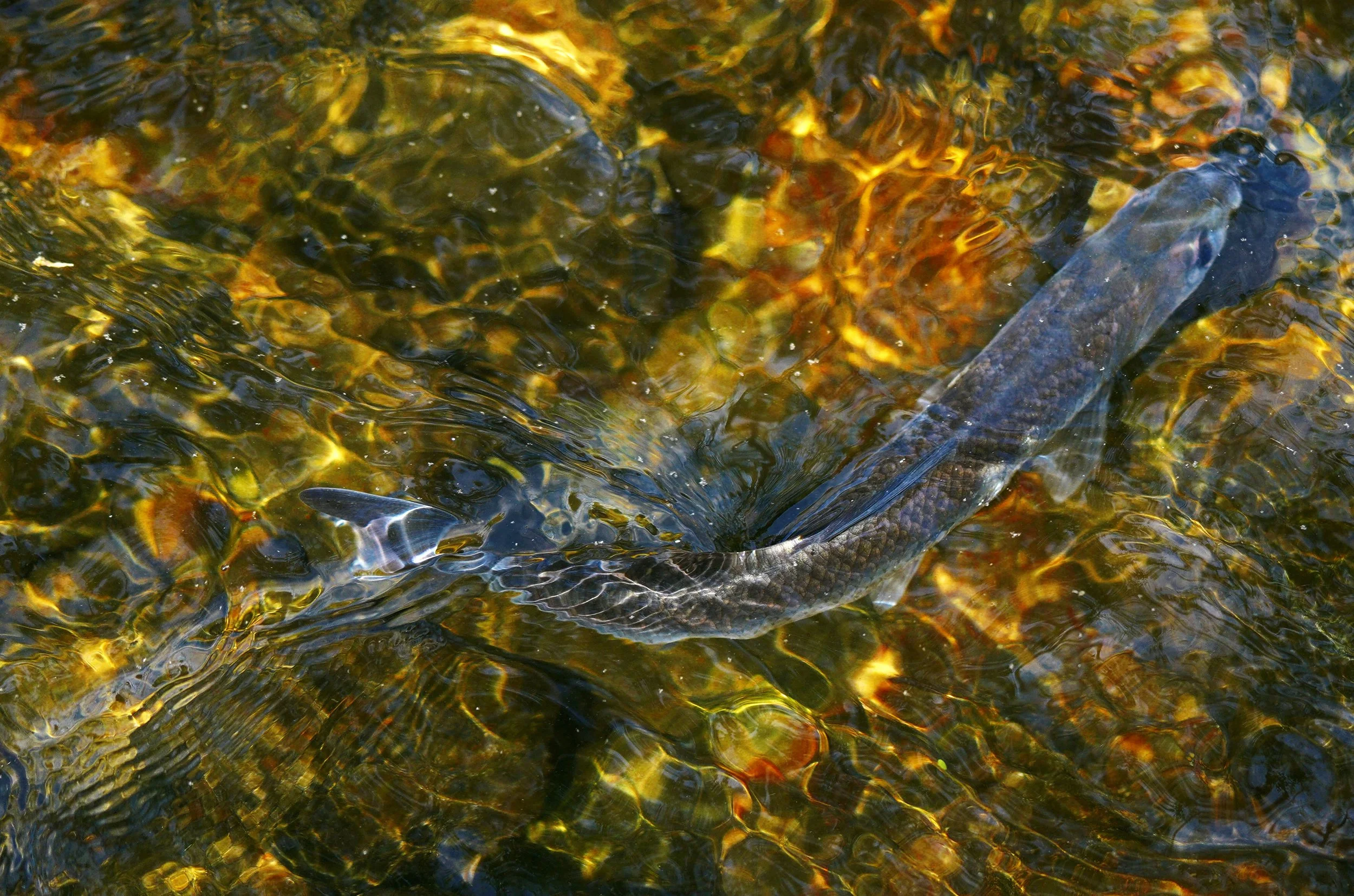
Munnawhatteug, a river herring, on its way to Horn Pond. Credit: Sasha Knittel
The herring also carry vital ocean nutrients in their stomachs, which are dispersed along the way. As rivers swell, these nutrients enrich the soil and strengthen the food forests that have been meticulously managed by Indigenous populations for thousands of years. The journey continues through the Aberjona River and various ponds, ending at Horn Pond Brook. 17th-century records describe these waterways as being so thick with fish that one could walk across their backs. Today, however, the migration is hindered by a dam and rocky spillway that prevents the herring from entering the pond.
The hills leading to Horn Pond Mountain, known as Towanda ("peaceful resting place"), mark the final destination and contain ancient burial grounds of the Naumkeag communities. In the early 17th century, Sachem Wabanowi (Waban) and his extended family would place their wetu between the pond and the surrounding food forests and hunting grounds.
The community worked together to collect alder and willow saplings for stakes, and fox grape vines for waddling, to erect fish weirs along the brook and pond banks. Younger generations, like Waban's daughter Nansema, took the lead in collecting milkweed and nettles to be processed into cordage and woven into nets. Near the pond, women processed the catch—cleaning, salting, or smoking the fish for preservation, and using the remains as fertilizer for their gardens. As night fell, families gathered around fires to share meals of fish and corn cakes while elders practiced the age-old tradition of storytelling. These stories passed down knowledge regarding creation, ancestors, and our responsibility to the environment—including the story of the mountain (Towanda) that rose from innitou (waters of creation), known today as Horn Pond.
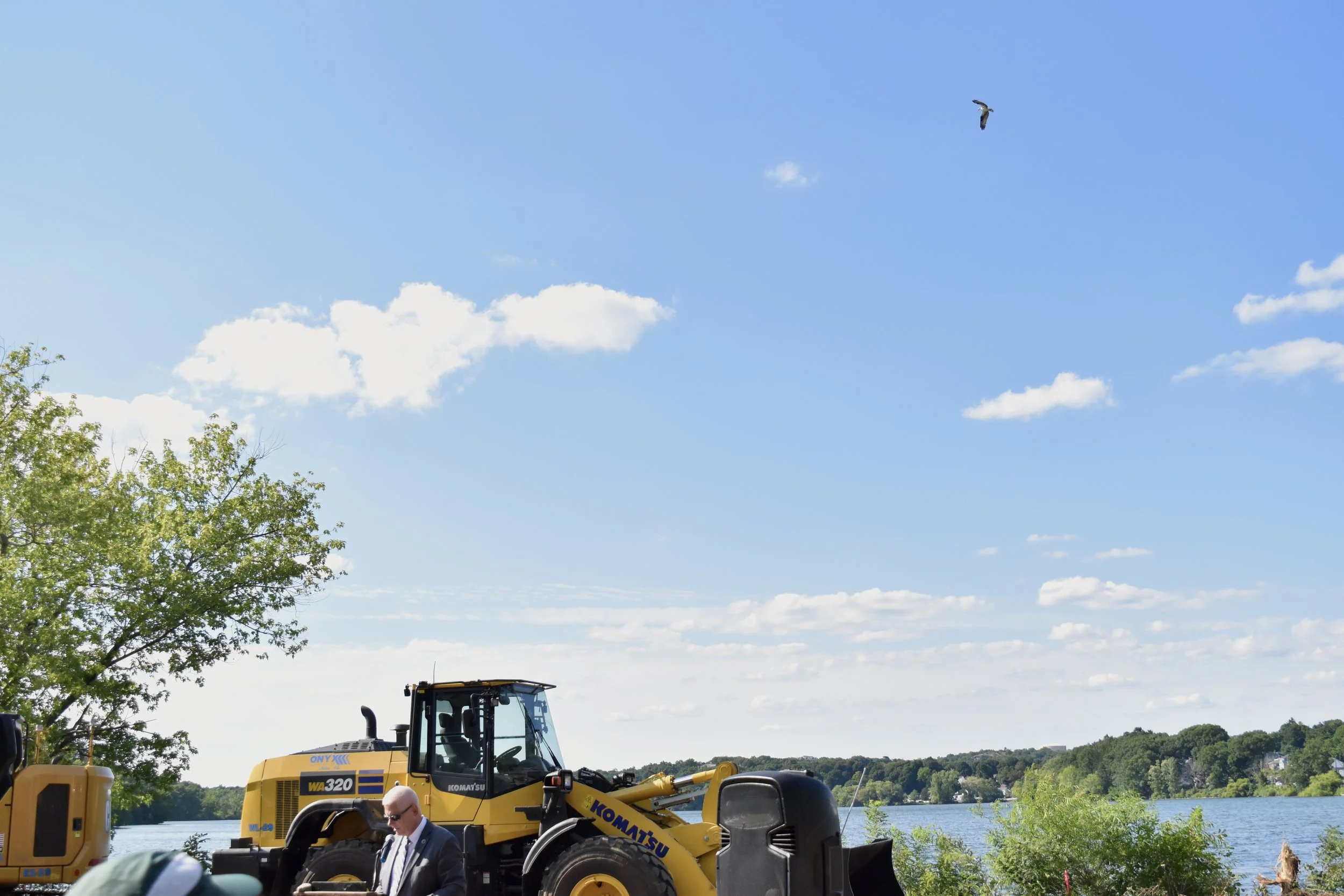
An osprey swoops in the air above Woburn Mayor Michael Concannon at the groundbreaking ceremony for the new Horn Pond Fish Passage. Photo: Isaiah Johnson