By Jasiah Ortega, 2026 MyRWA Environmental Science & Stewardship Fellow
What is your favorite part of the Mystic River watershed? Is it swimming in the upper Mystic Lake? Or maybe it’s kayaking through the river’s serpent-like channels. Perhaps it’s cycling through the many paths along the greenways. Whatever activity you choose to enjoy, the Mystic River is a place that many call home.
My name is Jasiah, and I was an Environmental Science & Stewardship Fellow this past summer for the Mystic River Watershed Association. My time with MyRWA has been an ineffable experience, with a combination of work in water quality sampling and testing and invasive species removal.
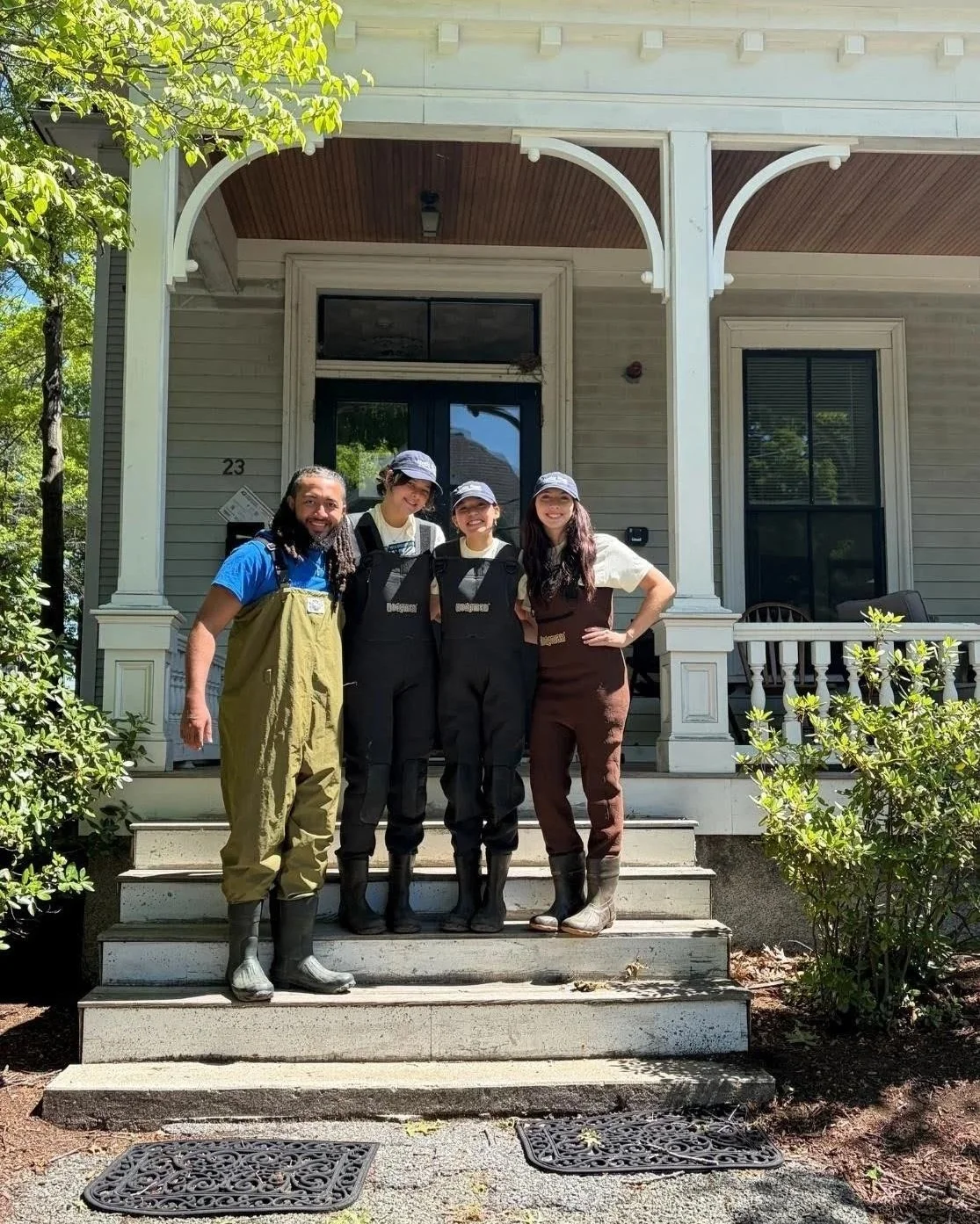
Jasiah, Isa, Sydney, and Sarah at the MyRWA office getting ready to collect water quality samples.
There were 3 other Environmental Science & Stewardship Fellows besides myself—Sydney, Isa, and Sarah. Together we collected over 360 water samples from the Mystic River over the course of 10 weeks! Most of these samples were to test for bacteria (Enterococcus & E.coli). This testing is essential for the safety of recreational activities on the Mystic (canoe/kayaking, swimming, sailing, etc.) as well as the health of wildlife who inhabit and make the river an enchanting part of the community.
Water quality in the Mystic River watershed is assessed annually in collaboration with the U.S. EPA in the form of a water quality report card with letter grades “A+” through “F.” This summer, my cohort focused on a particular tributary in the Mystic known as Mill Creek in Chelsea, which consistently receives an F grade on the report card. Our goal this summer was to collect quantitative data that could assist the City of Chelsea in future action plans to improve water quality at Mill Creek.
The other half of our work this summer was invasive species removal. Invasive species are organisms that are not originally from the Mystic River watershed that outcompete native species. With no natural predators and a habitat that is ideal for growth, invasive species reproduce at an alarming rate and damage the local ecosystem. This summer, Sydney, Isa, Sarah, and I led volunteer groups at multiple locations to remove bittersweet, water chestnut, and garlic mustard.
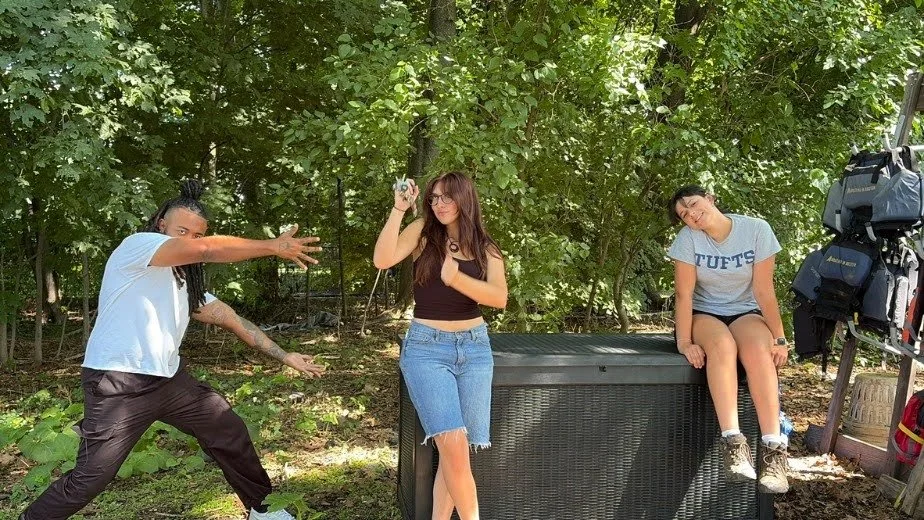
The fellows out in the field helping transport water chestnut supplies
While a majority of volunteers we met this summer were local community members within the Mystic, some volunteers came from communities all over Massachusetts, including Concord, Littleton, and Dorchester. There were even volunteers from Nashua, New Hampshire! This love and passion for the Mystic River translated into the collection of over 2,228 baskets of water chestnut over the course of the summer. That equates to over 44,560 pounds!
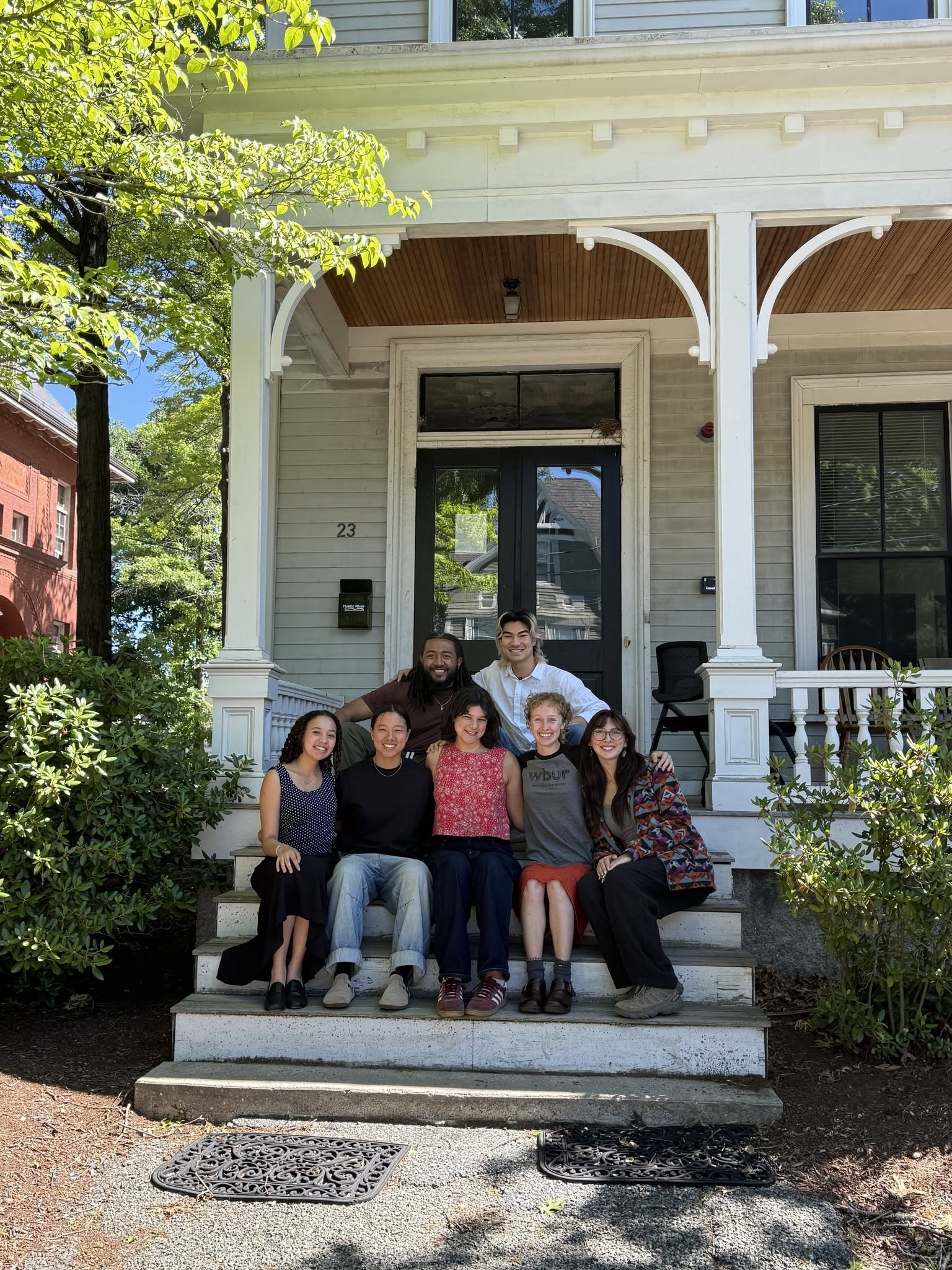
MyRWA’s full summer fellows cohort: Jasiah, Lucas, Sydney, Alice, Isa, Hannah, and Sarah.
The Environmental Science & Stewardship fellows weren’t the only fellows working this summer. Alice, the Urban Forestry Fellow, developed a comprehensive GIS-based decision support tool for urban forestry planning to help guide future tree planting efforts across the Mystic River watershed. Where can future trees be planted to maximize environmental benefits while also advancing equity by prioritizing underserved communities and ensuring that sites are feasible for planting and long-term maintenance? Alice’s project was created to answer this question and assist in discovering need and opportunity.
Hannah, the Mystic Greenways Fellow this summer, spent the summer collecting quantitative and qualitative data at ten different community programs across the watershed. By coordinating, monitoring, and evaluating 2026 programming for the Mystic Greenways, her research will culminate in a comprehensive report identifying how MyRWA can best realize diverse programming for all ages, abilities, and backgrounds on the Mystic Greenways.
Lucas, the Climate & Social Resilience Fellow this summer, worked on mapping extreme heat exposure against socially vulnerable populations (older adults, adolescents, people with disabilities, and caregivers) across the 21 municipalities of the Mystic River watershed, to identify where heat burden and social vulnerability overlap and inform MyRWA's environmental justice priorities. By using programs such as ArcGIS & R, Lucas’s mapping will assist in future planning for MyRWA in combating the increased frequency of extreme heat.
Each of us fellows is grateful for the experiences we have had this summer. MyRWA has given us all the opportunity to see, change, and call the Mystic River home.