The decision supports the development of world-class, climate-resilient open spaces to buffer Boston's commercial ports and residential areas.
In a recent notice, the Massachusetts Office of Coastal Zone Management (CZM) has issued a minor map correction for the Mystic River Designated Port Area (DPA), and in doing so has resolved decades of regulatory uncertainty for the Little Mystic Boat Ramp, a municipally-owned public access facility located in Charlestown. The news, announced through the state’s Environmental Monitor on March 25th, comes after almost a decade of work by the Mystic River Watershed Association (MyRWA) to develop a world-class and climate-resilient open space on the Little Mystic Channel in close partnership with Charlestown residents and key stakeholders.
“The Little Mystic Boat Ramp represents an opportunity to transform Charlestown’s relationship with the Mystic River by expanding access for recreation while strengthening connections to the natural environment,” said Victor Castro, a member of the Little Mystic Channel Steering Committee, a group of local residents who meet regularly to determine redevelopment priorities and guide community processes. “With new opportunities for paddling, shaded gathering spaces, and amenities for both active and passive recreation, we look forward to creating new ways for neighbors to connect, for children to play, and for families to beat the summer heat.”
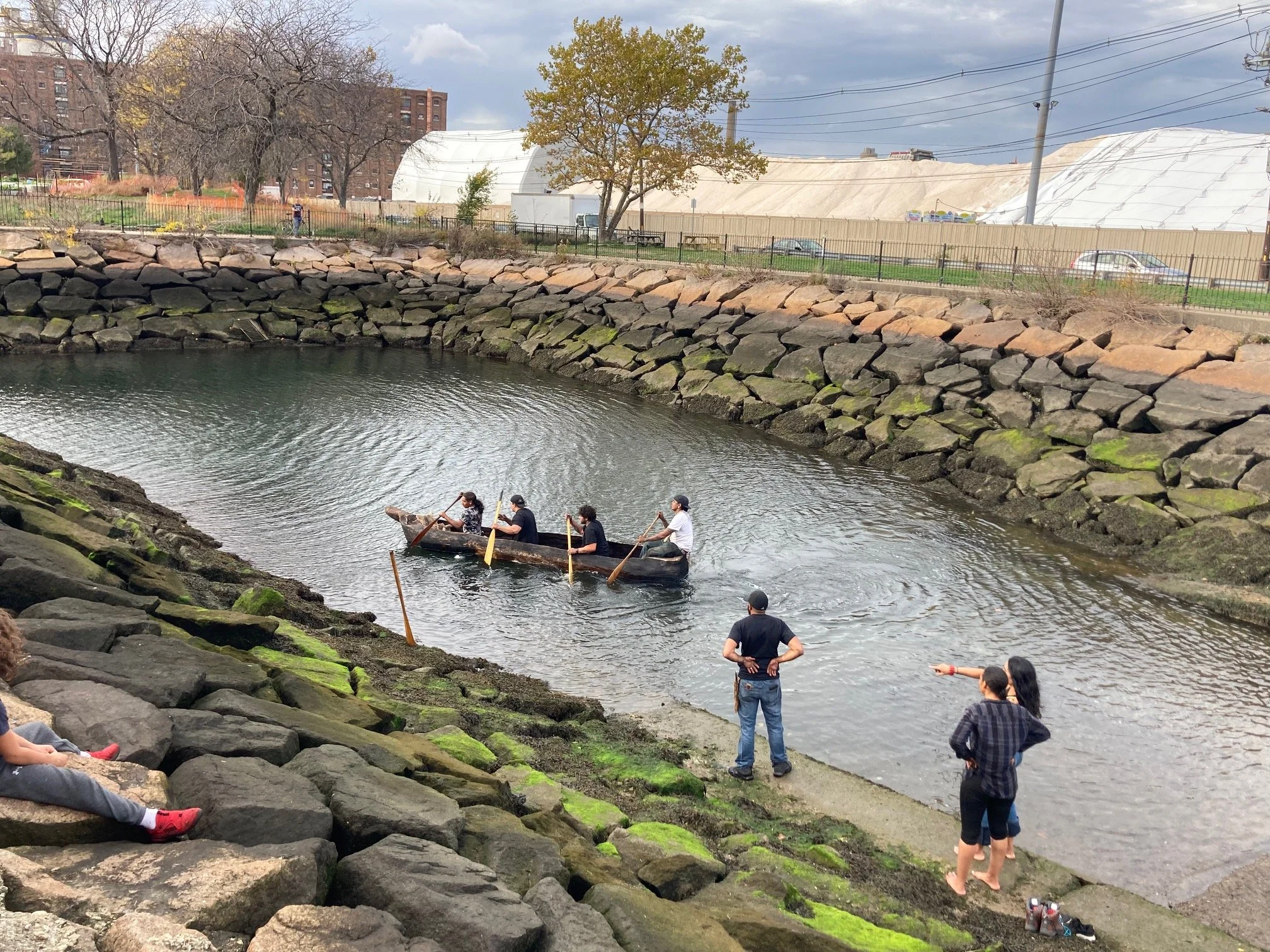
Andre StrongBearHeart Gaines, Jr. of the Nipmuc people, leads the burning and launch of a Mishoon — a traditional dugout canoe — at the Little Mystic Boat Ramp in 2022. Credit: Jean Clark
The Little Mystic Boat Ramp, originally built in the early 1970s with federal Land and Water Conservation Funds, was permanently protected as conservation land, but later found itself included within the boundary of the Mystic River DPA, restricting its use to strictly maritime industrial activities. Legal aid from the Conservation Law Foundation (CLF) brought forward five decades' worth of evidence to CZM in an effort to highlight the parcel's contradictory regulations and justify its removal from the DPA.
As CLF elaborates, “The Little Mystic Boat Ramp was intended to be conserved for public recreation long before it was pulled into the DPA. CLF is grateful that CZM is now correcting this error. This decision protects community members' ability to access Boston Harbor and enables the development of a modernized boat ramp and highly desired waterfront open space in a neighborhood that has limited access to nature.”
Within a 10-minute walk of the boat ramp, 1,366 households live in the CharlesNewtown and Bunker Hill affordable housing developments. Seventy-two percent qualify as low-income, 90% are people of color, and the per capita income is $17,548. The immediate area has the lowest tree canopy cover in the City of Boston, and ranks among the worst nationally for environmental indices related to air quality, proximity to traffic, and hazardous waste (Tree Equity Score; EPA 2024). The first phase of improvements, a shaded plaza, opened to the public at the start of 2025 with generous funding from the Boston Community Preservation Act, the Barr Foundation, and the Lawrence and Lillian Solomon Foundation.
“Ongoing revitalization at the Little Mystic Channel paves the way for a better, more sustainable future along the Charlestown waterfront,” notes Karl Alexander, Greenways Program Senior Manager at MyRWA, “One that will improve community health and wellbeing, mitigate climate impacts, and encourage active mobility. High-quality parks and connected paths are not luxuries; they are essential infrastructure for 21st-century cities.”
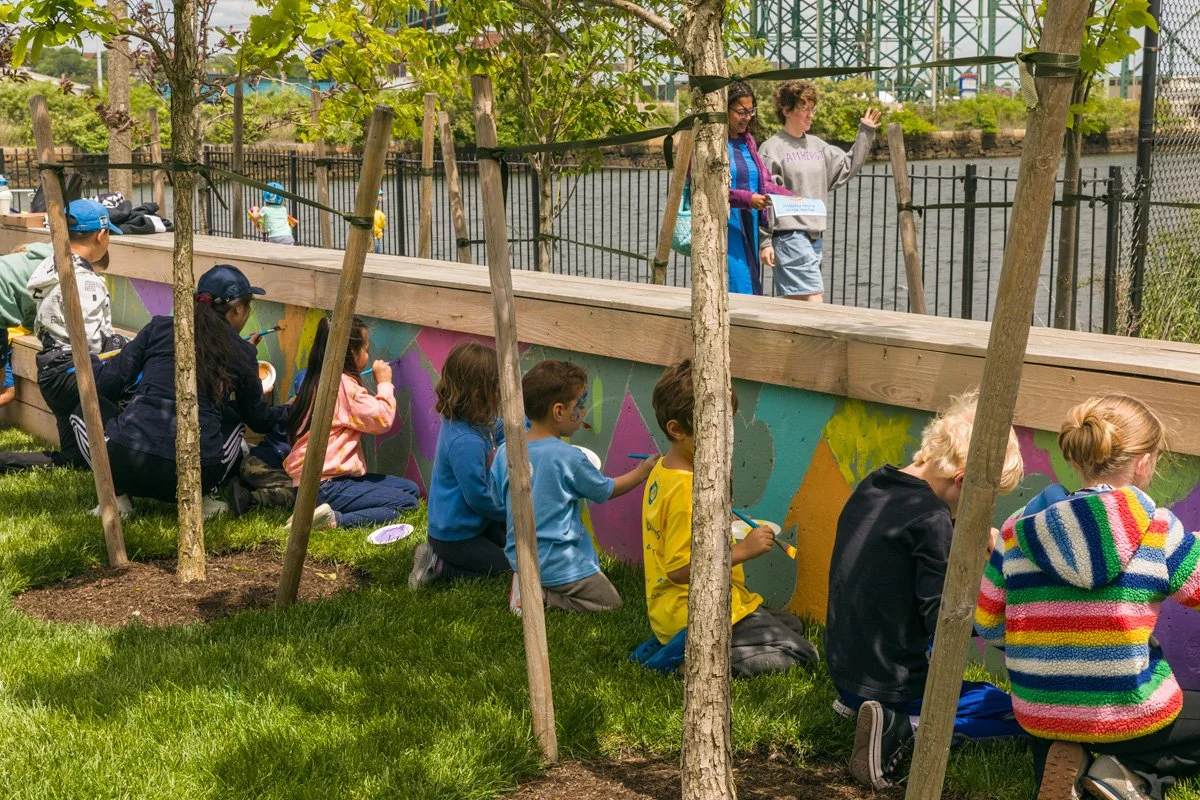
Kids paint a mural during the grand opening of the Little Mystic Plaza, across the channel from the Boat Ramp, in 2025. Credit: David Mussina