
-By Grace Gallagher
Grace is a graduate student at Harvard Divinity School (HDS) and a fellow at MyRWA, fulfilling her field education requirement for her Masters of Divinity. She is not religiously affiliated but studies spirituality of land and more-than-human beings.
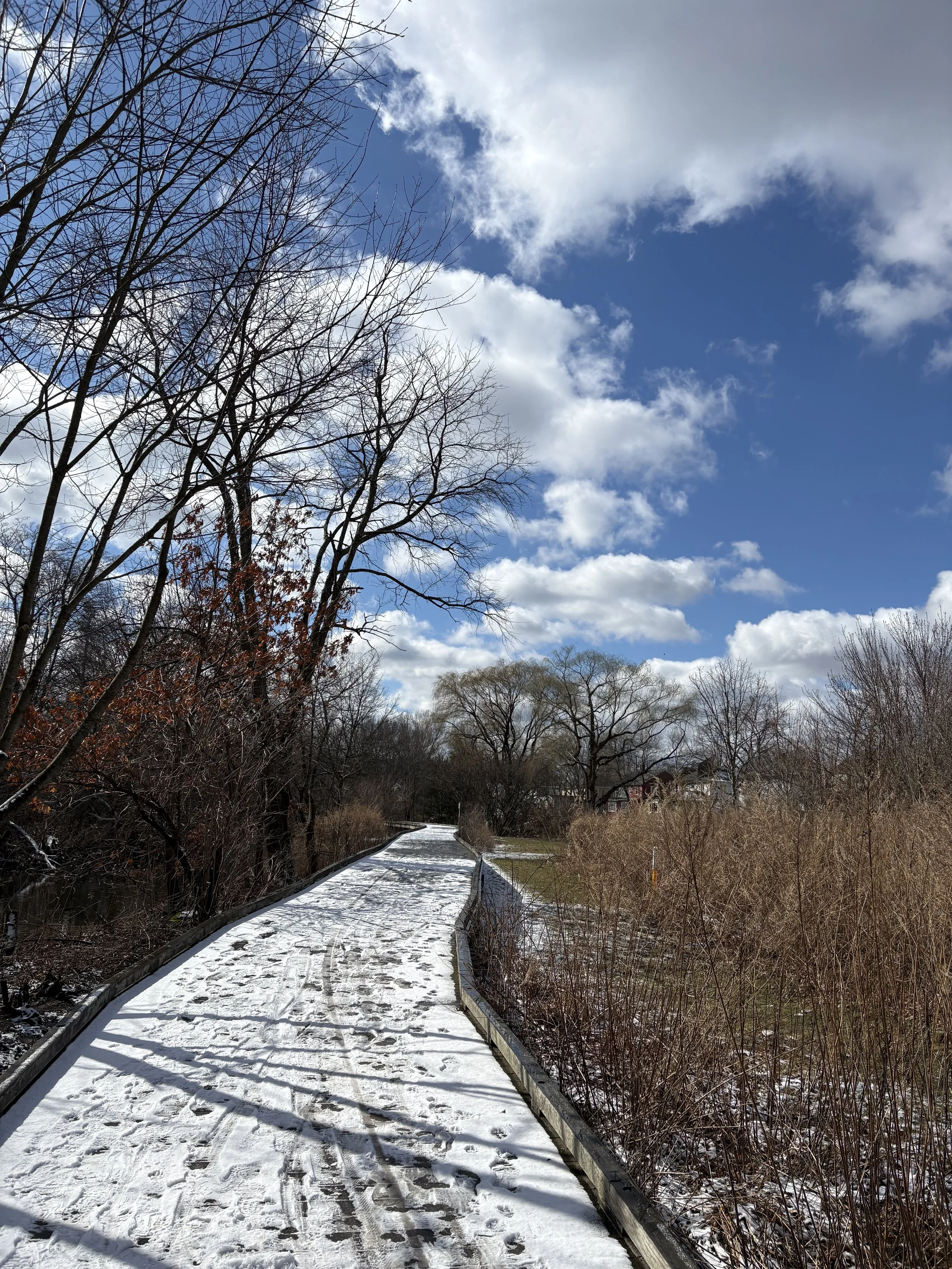
Alewife Brook reservation Greenway on March 24, 2026 after a dusting of Spring snow. Taken by Grace Gallagher
I am struck by the memory of water this month. As I have gotten to know the Mystic River, I have learned that my human senses only grasp a few pieces of the whole watershed's interconnected experiences of seasons. This winter, we finally had heaps of snow. And now, as the mountains of snow melt away and the rain clouds loom almost every day, Spring has arrived. Before the glorious May flowers can bloom, we must persist through the soggiest of April showers. We will be lucky if April doesn’t bring us more snow!
Rain remembers what this land looked like before the river was straightened. Each twist and turn recalls the flow of the river before the cities around us were built. And still, rain knows where to flow. Rain follows contours and always runs downhill. Rain once ran through the soil and ground and slowly trickled into our river systems, but now, with slick streets and concrete everywhere, rain flows much more quickly into the river. Maybe you saw this happen last spring, or maybe you saw snowmelt clog up drains in your neighborhood this winter. Through all these changes, the river still flows. Water has memory; water remembers this land.
The meandering course that rain takes through the city is the eco-memory of water in this specific place. This repetition of spring rain is a call and response between water and land. The land remembers this rhythm thanks to the path of rain. With pavement instead of pastures and stormwater pipes instead of streams, the flow of rain through our city is the river remembering.
Climate change is the threat of amnesia. With shifting biomes and precipitation patterns, our river has and will continue to change. When warmer winters bring more rain than snow, certain plants miss the cue and blossom early. With the earlier rain season, the sprouting seeds pop up too soon. Those who come on time and with the right amount of rain might flower too early before migrating birds return to feast on the bounty. Each piece of our land is holding on to a collective memory, and climate change bodes dementia. Just as nerve endings slow and brain synapses no longer connect, the interconnected patterns of our land are beginning to slip. These glitches in weather patterns, sprouting habits, and food chain connections could become substantial enough to threaten the entire watershed.
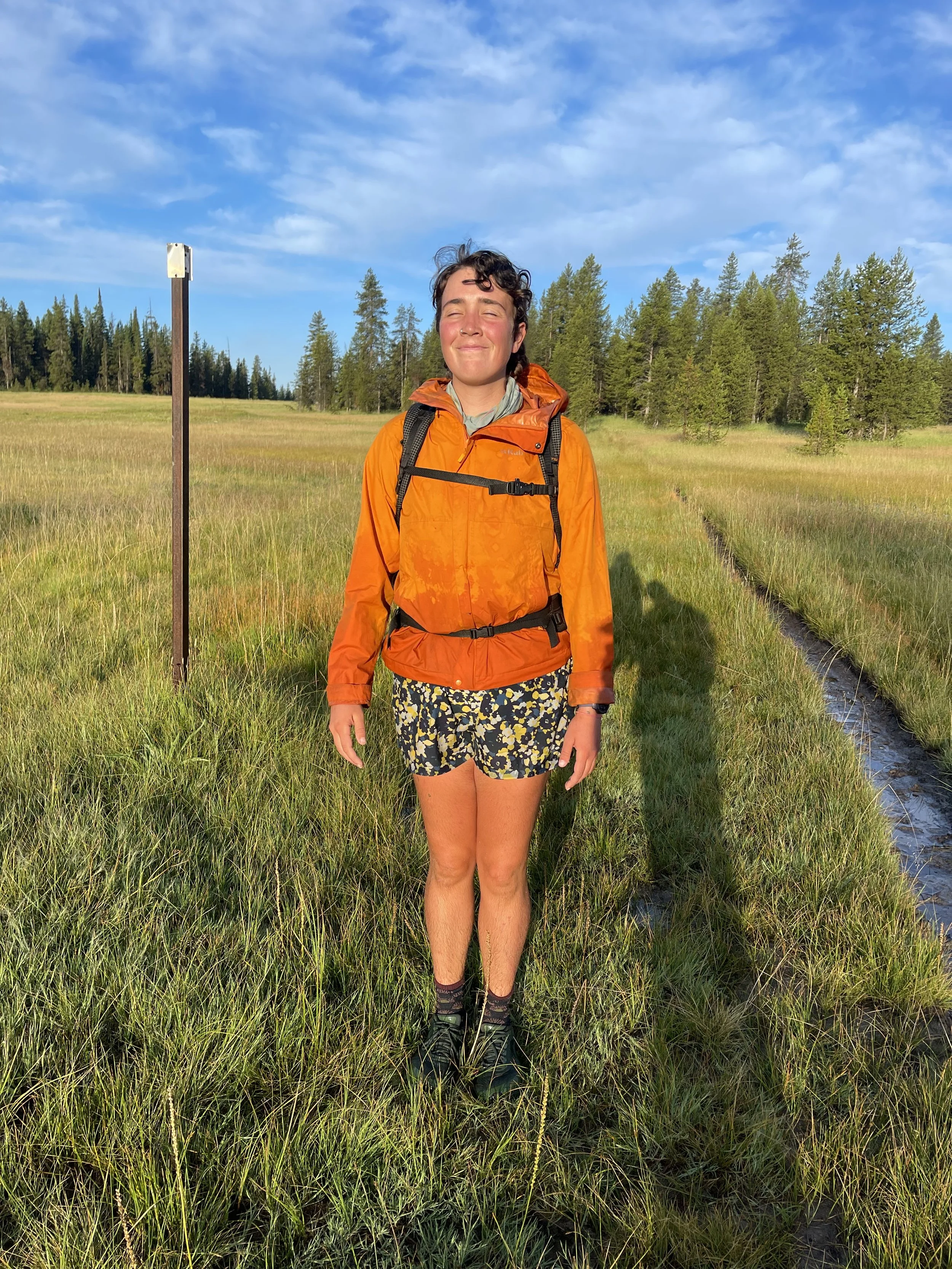
Grace Gallagher emerging from a storm in Yellowstone NP after hiking through days of rain, August 2023. Yellowstone River Watershed is the longest, contiguous, undammed river in the United States.
Looking at our neighboring watersheds, we see how climate change forces forgetfulness. It is severing the ecological memory of entire biomes. The Western United States is anticipating major droughts and record heat this summer. Across the country, these river systems dry up and confront climate change dementia as the strands of their interconnectedness snap. Here, we worry that the river might swell up into the tidal zones and flood marshlands where people live. We might not worry about our river running dry or catastrophic drought, but we are all still threatened by a spreading dementia throughout the land.
For now, though, the rain continues. The land remembers. Every time it rains here, I am reminded that the river catches all of that water and offers it back to us. In the midst of ecological despair, what a gift it is to live here with all this rain and such a strong-flowing river. Our ecological habits and patterns are already or on the verge of shifting. We cannot sacrifice our land’s memory. We must help the Mystic River remember where it has always flowed. We can help the Mystic remember, we must appreciate rain.