Belle Isle Marsh is the largest remaining salt marsh in Boston Harbor. It is a home for birds, fish, crabs and mammals–and MyRWA has been working to restore this habitat in partnership with the MA Department of Conservation and Recreation (DCR), the Friends of Belle Isle Marsh, and the Nature Conservancy. MyRWA team members were fortunate to join a recent Salt Marsh Adaptation & Resiliency Team (SMARTeams) workshop hosted by DCR. Check out what we learned about Salt Marsh Restoration:
Lesson #1: There is no such thing as a pristine marsh.
Many people may look out at their local marsh and think of it as pristine wilderness; however, every single salt marsh on the Northeast coast of the United States has evidence of alterations by humans.
There is evidence of indigenous use of marshes for food production and large changes to the landscape came from farming practices that began 100-200 years ago when many European settlers started to use salt marshes to grow timothy hay and some vegetable crops.
These farmers dug ditches in the salt marsh to drain them to just the right level for crop roots to be happy. There are four types of agricultural ditches that you might observe in salt marshes:
Marginal ditches were placed along the edge of the marsh, between the marsh and upland
Drainage ditches created pathways in the marsh for water to flow out, draining the marsh area
Cross ditches (or borrow ditches) were dug to get soil for embankments. Embankments blocked areas of the marsh from flooding
Trunk ditches were water control structures dug through embankments to allow farmers to adjust the amount of water coming in or out
You may also observe mosquito ditches, typically shallower than agricultural ditches, which aimed to reduce the mosquito population by allowing fish to reach and eat mosquito larvae.
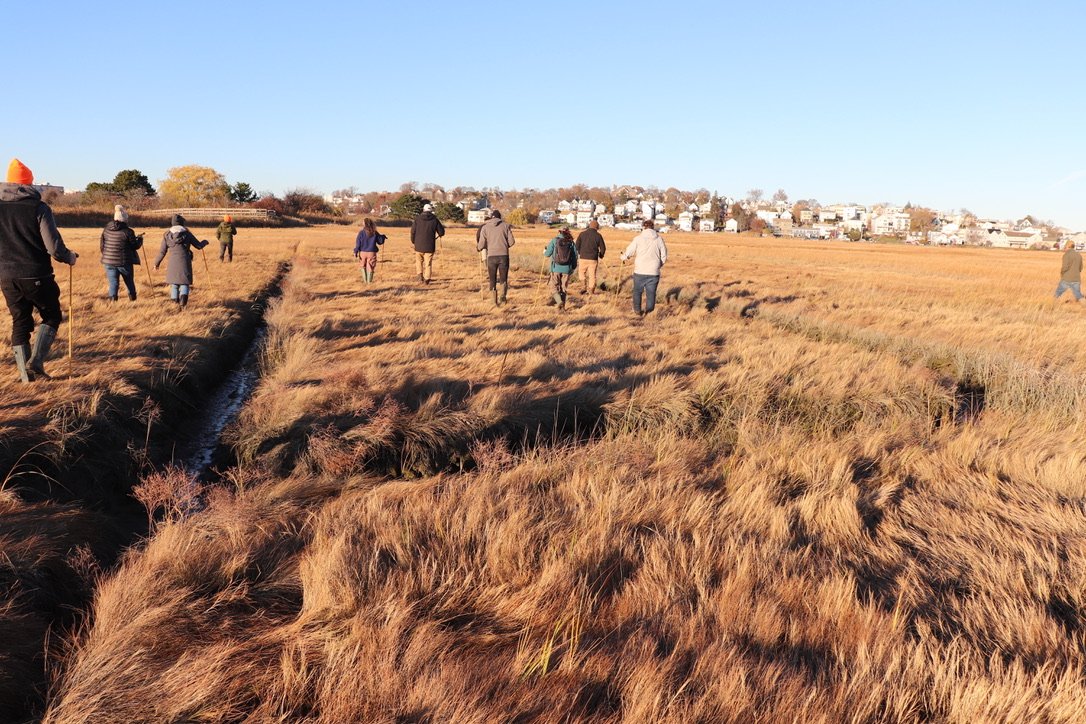
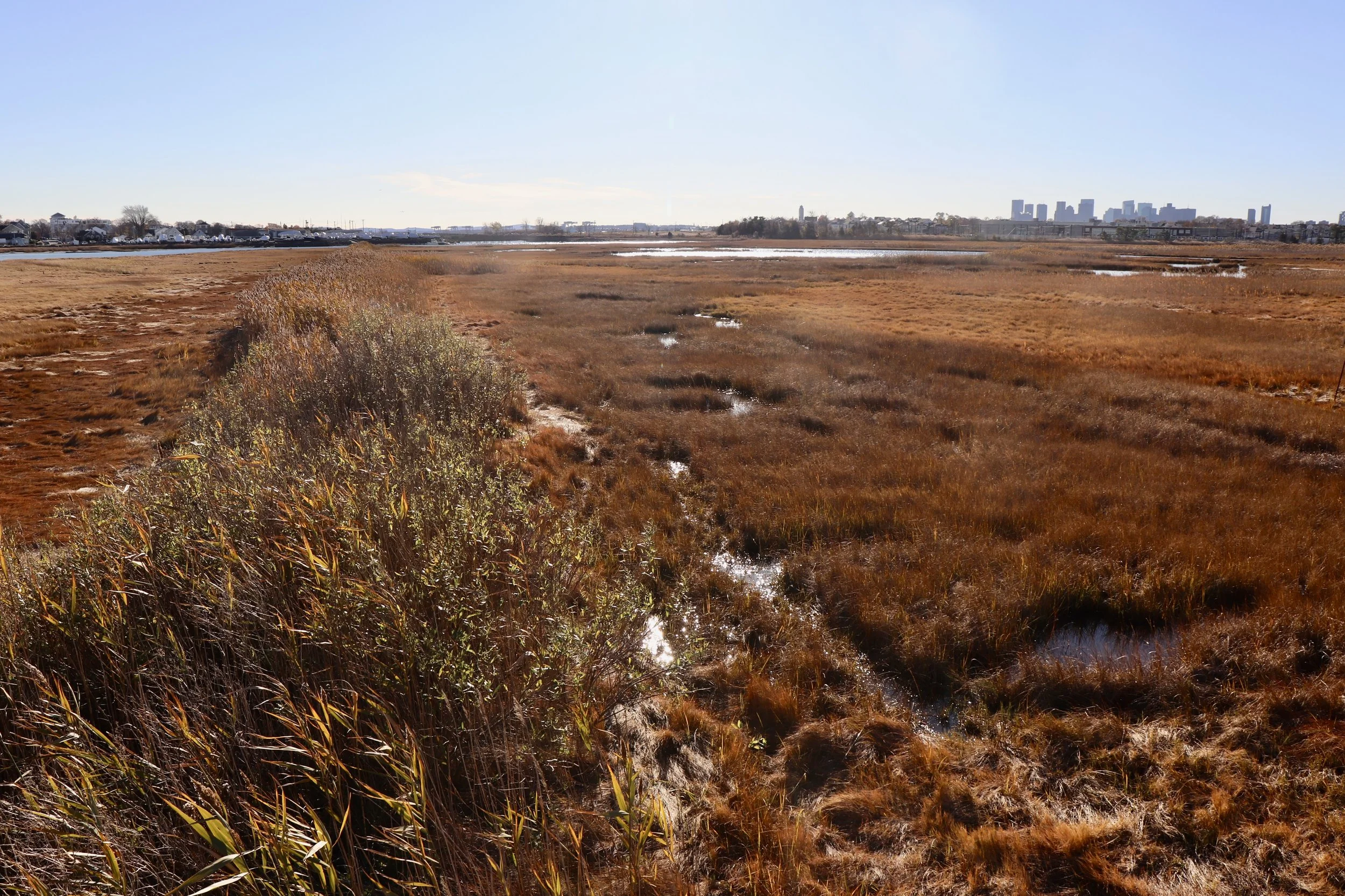
Photos: A network of ditches and embankments are visible at Belle Isle Marsh. (Left) Three intersecting borrow ditches. (Right) An embankment between two areas of the marsh. Credit: Daria Santollani
Lesson #2: These ditches damage marsh ecosystems.
A healthy salt marsh has a balance of building processes (sediment trapping, root production, sea level rise (up to 5mm/year) and eroding processes (compaction by floods and ice, decomposition of roots and peat, physical exposure to waves and ice).
Human-made ditches disrupt this balance and can send marshes into a damaging cycle. If a ditch becomes clogged with sediment or plants, the ditch and surrounding area will flood. Marsh plants that are used to tidal flows cannot survive in an area that is flooded all the time so they die off and the area becomes an open water pool. When the pool can no longer hold any more water, it will breach and water will flow out, allowing plants to grow again. However, if the breach is not in a stable location, plant growth may block the breach and the pool forms again. The pool can continue breaching and reforming indefinitely if no stable location is reached.
These pools can get so large that they are deemed “megapools” – hundreds of square meters in area.
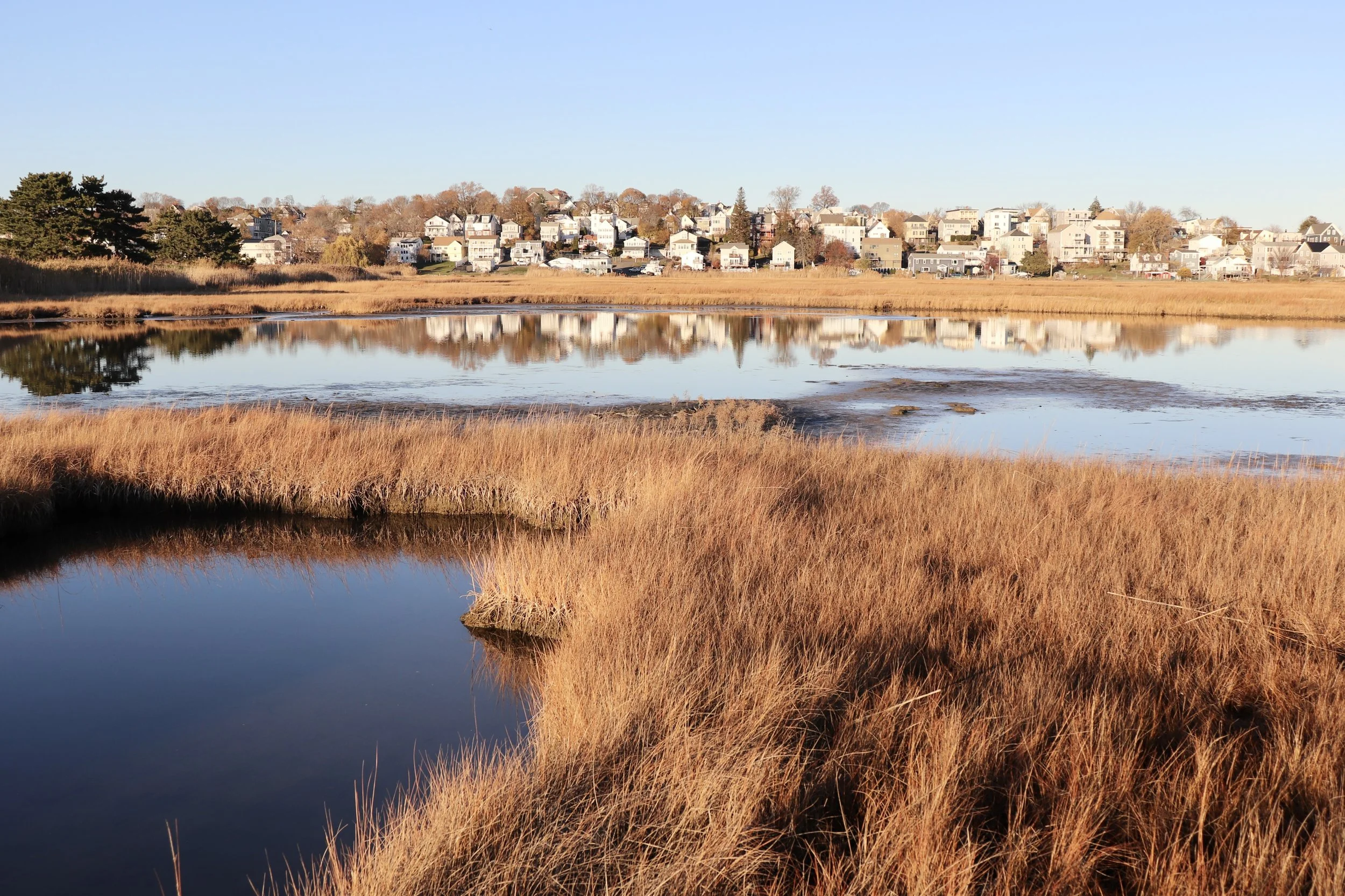
Photo: A megapool at Belle Isle Marsh. Credit: Daria Santollani
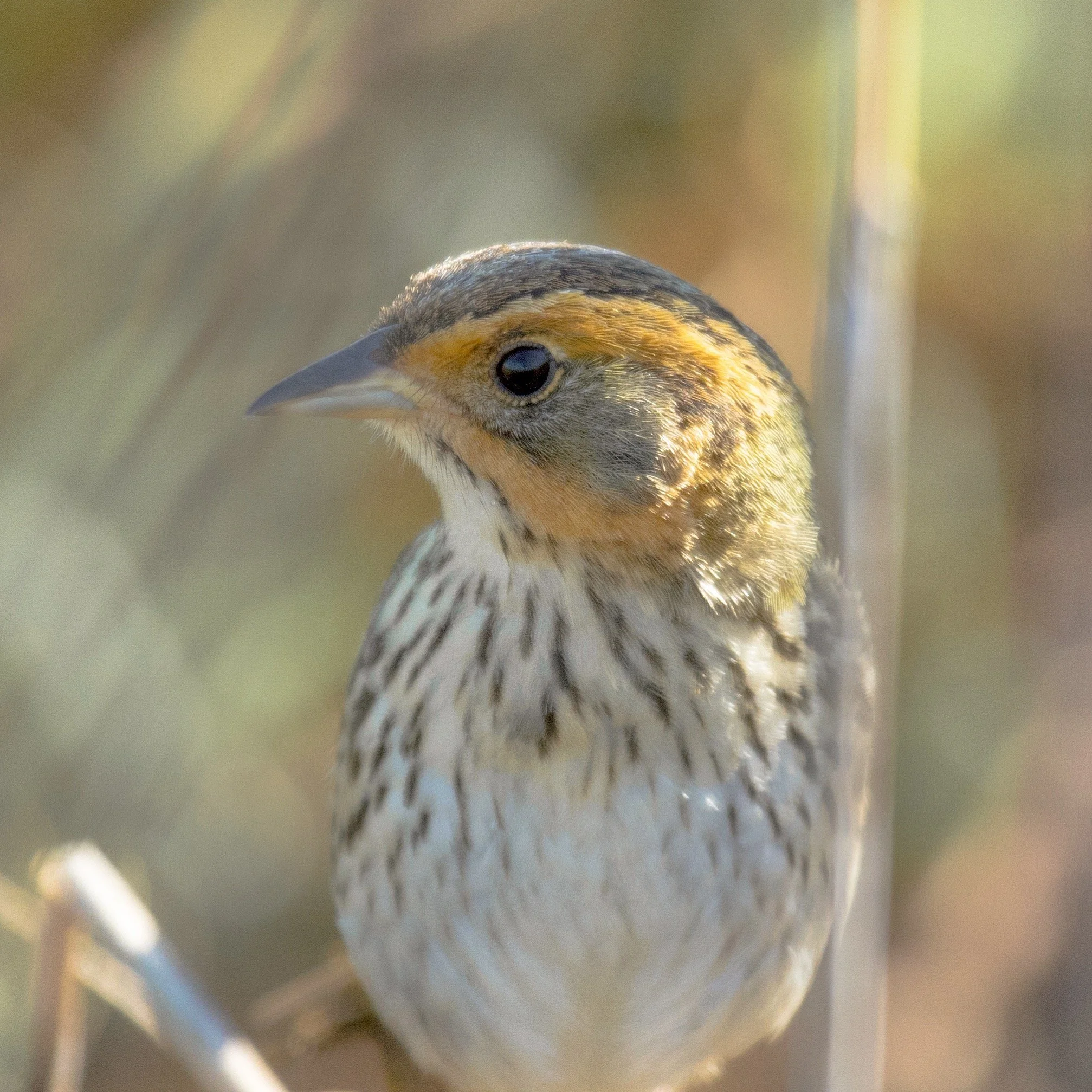
The loss of healthy native plant growth in these pools limits carbon sequestration and habitat for wildlife. In addition, these pools reduce an important function of salt marshes which is to buffer inland areas against powerful storms and coastal flooding.
Photo: Native marsh grasses are habitat for many species, including the endangered salt marsh sparrow. Credit: DCR Stewardship Research Biologist Sean Riley
Lesson #3: There are simple, effective ways to restore salt marsh hydrology.
The SMARTeams approach aims to restore salt marshes to single-channel hydrology, meaning the marsh has just one main channel with tributaries that flow to it to help the marsh flood and drain in natural cycles.
To achieve single-channel hydrology, marsh managers can 1) place runnels (shallow channels) to drain megapools in a stable way and allow vegetation to regrow and 2) remediate existing ditches by filling them with adjacent salt marsh grasses to promote steady soil building.
Importantly, this restoration should be done in consideration of the marsh’s platform hydrology, surface hydrology, wildlife management considerations, and with a plan for long-term management. You can learn more about the SMARTeams approach at https://www.fws.gov/story/2021-08/building-great-marsh-resiliency-bottom
DCR, MyRWA, Friends of Belle Isle Marsh, and the Nature Conservancy are exploring these solutions for implementation at Belle Isle Marsh in the coming years. We are thrilled to learn about these techniques and see this nature-based approach improve climate and ecological resilience in our watershed.
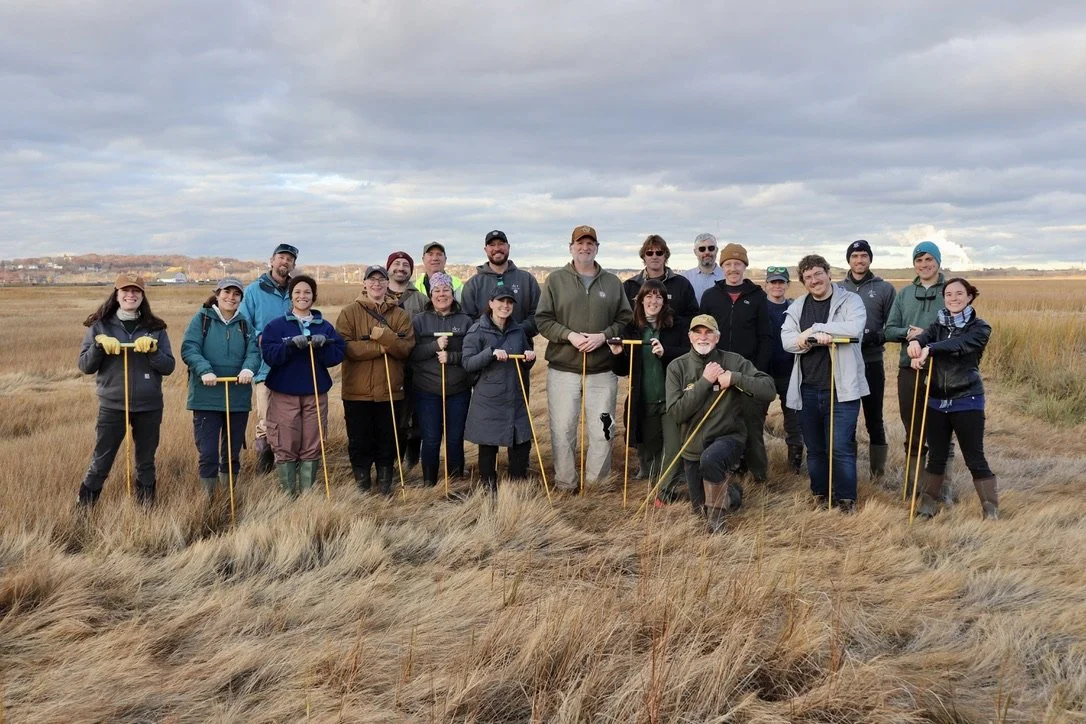
Thank you to our partners at DCR and salt marsh restoration experts Susan Adamowicz, Geoff Wilson, Dave Burdick, and Grant McKown for hosting this workshop!