- By Alice Chou
A key part of MyRWA’s mission is to increase access to information and opportunities to learn about the natural world. Our education program achieves this through hands-on and inquiry-based lessons and enables us to reach youth across the watershed, empowering the next generation to imagine and create a better future in the Mystic.
By the end of the 2025–2026 school year, our education program will have reached over 4,000 students and families! Through school visits, field trips, after-school programs, and STEM nights, we have spent the year creating immersive opportunities for learning, exploration, and community-building.
None of this would be possible without the teachers, families, community partners, volunteers, and funders who ensure quality watershed education is accessible to our students. Thank you for making this year such a massive success!
Centering environmental justice and community access
This year, we intentionally focused our efforts on communities most impacted by environmental injustices. Out of the 36 different schools we visited this year, 21 are designated Title I schools – a federal designation determined by the percentage of students from low-income households. Furthermore, we engaged with 15 of the 21 municipalities that make up the Mystic River watershed, connecting learners with the urban ecosystems right in our backyards.
Expanding this commitment to access, our team also partnered with several alternative high school programs this year, including Next Wave Full Circle, Coast Collaborative, and Curtis Tufts. These programs serve students who often do not thrive in traditional, lecture-heavy educational environments.
"The programming was highly effective. Our students collected water samples prior to the MyRWA visit, documenting their experience along the way. Gathering samples locally helped deepen their connection to the work and increased engagement. At Coast, it can be challenging to offer wet lab experiences due to our primarily computer-based curriculum, so this visit provided a valuable opportunity for hands-on learning…As a therapeutically supportive alternative program, this relationship-building component is especially important to our students’ success." — Ashley Tobies, Social Worker, Coast Collaborative
Deep Dives for All Grade Levels
Because every grade has different needs, all of our programming is customized to meet specific state learning standards while remaining deeply engaging. This school year saw a strong focus on upper elementary and middle school students. To emphasize the importance of our local places, we often utilized natural resources existing right outside of the school buildings!
For example, 5th graders at Lynch Elementary in Winchester compared the nutrient content between bottled water and water collected from the stream running right past their parking lot.
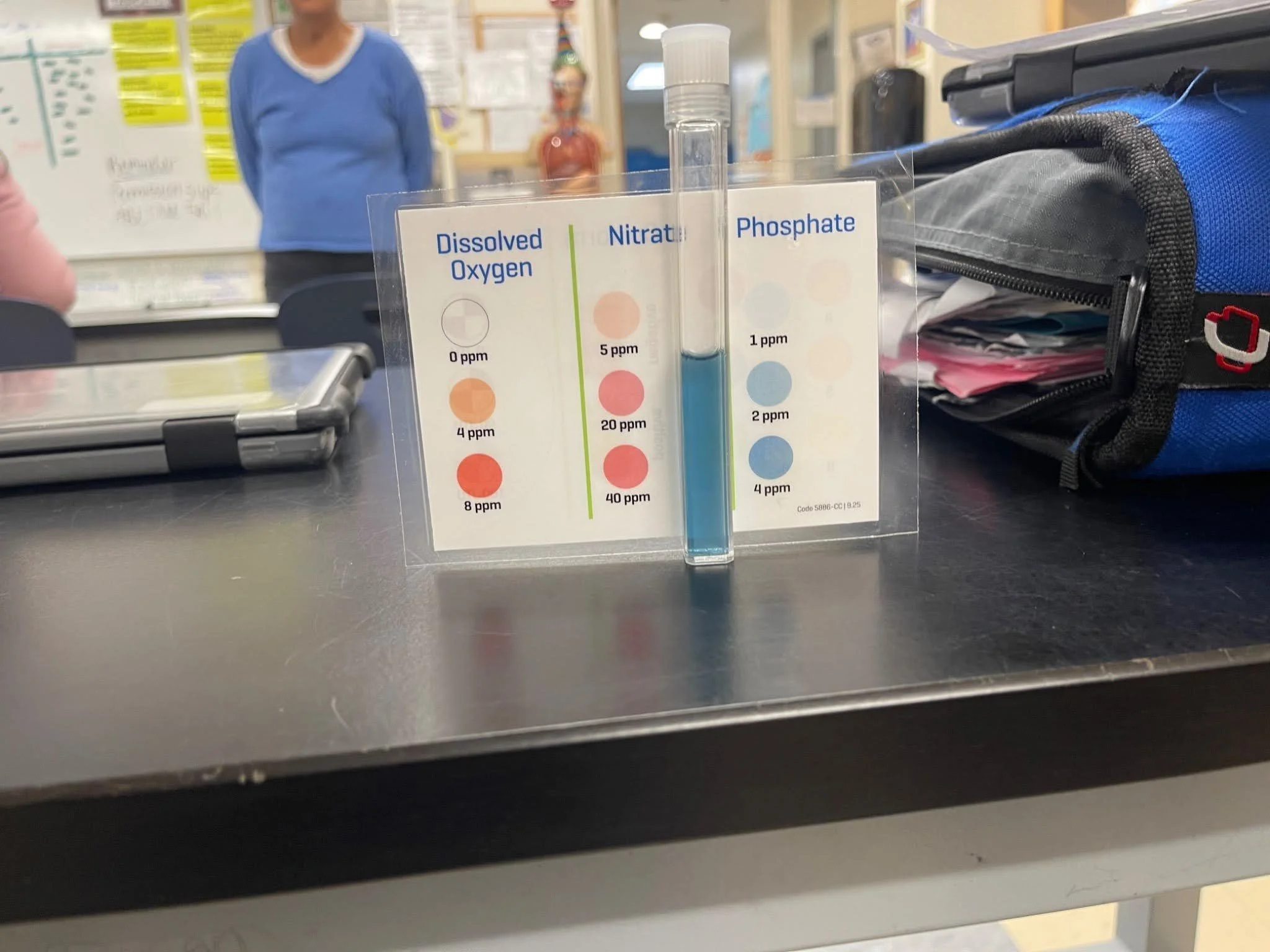
A 7th-grade student’s experimental results from the creek right outside Jonas Clarke Middle School in Lexington.
Here is what local educators had to say about the experience:
"The students were very excited to test the water at school and from a local source. I was so impressed with how well they did! Having the lesson based on local ecosystems was awesome along with the map so they could see exactly where the water came from.” — Katherine Michelangelo, 5th Grade Teacher, North Intermediate Middle School
"The kids LOVED both activities! The invertebrates were fascinating. The adults loved the age appropriate balance between physical activity and a focused task. I have heard nothing but positive comments from parents, students, and teachers!" — Rebecca Cummings, Kindergarten Teacher, Lynch Elementary School
Immersive experiences beyond the classroom
Our 24 field trips this year took students out of the classroom and directly into the living laboratory of the Mystic River watershed. These outdoor experiences allowed students to explore the intricate connections within our local ecosystems, including their own roles in protecting them.
Students were introduced to the power of community science, learning how real data collected by community members helps scientists track herring populations and monitor water quality. By observing, questioning, and recording data like true field scientists, learners begin to recognize that community is critical to vital scientific discoveries and protecting the environment.
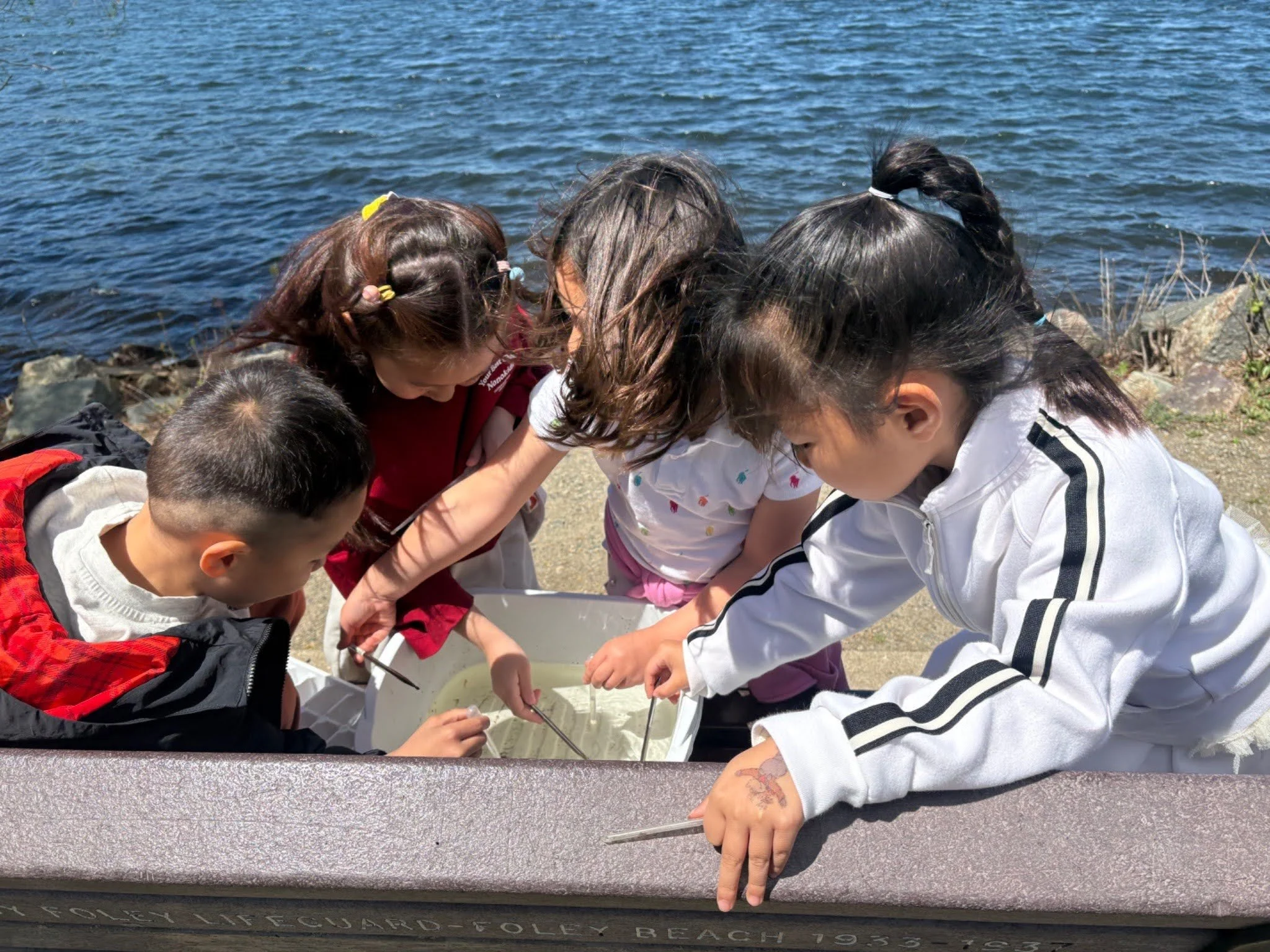
Students from Lynch Elementary investigating macroinvertebrates, the small spineless animals that are critical to the food web, from Horn Pond.
"My students are Woburn residents and many of them have not even visited Horn Pond. This trip is incredible for them to better understand their place in the community and the place their community has within the greater eastern Massachusetts ecosystem. As a teacher it is wonderful to see our students in a different context. Oftentimes seeing them out of the classroom sheds new light on their skills.” — Christopher Camille, Science Teacher, Joyce Middle School
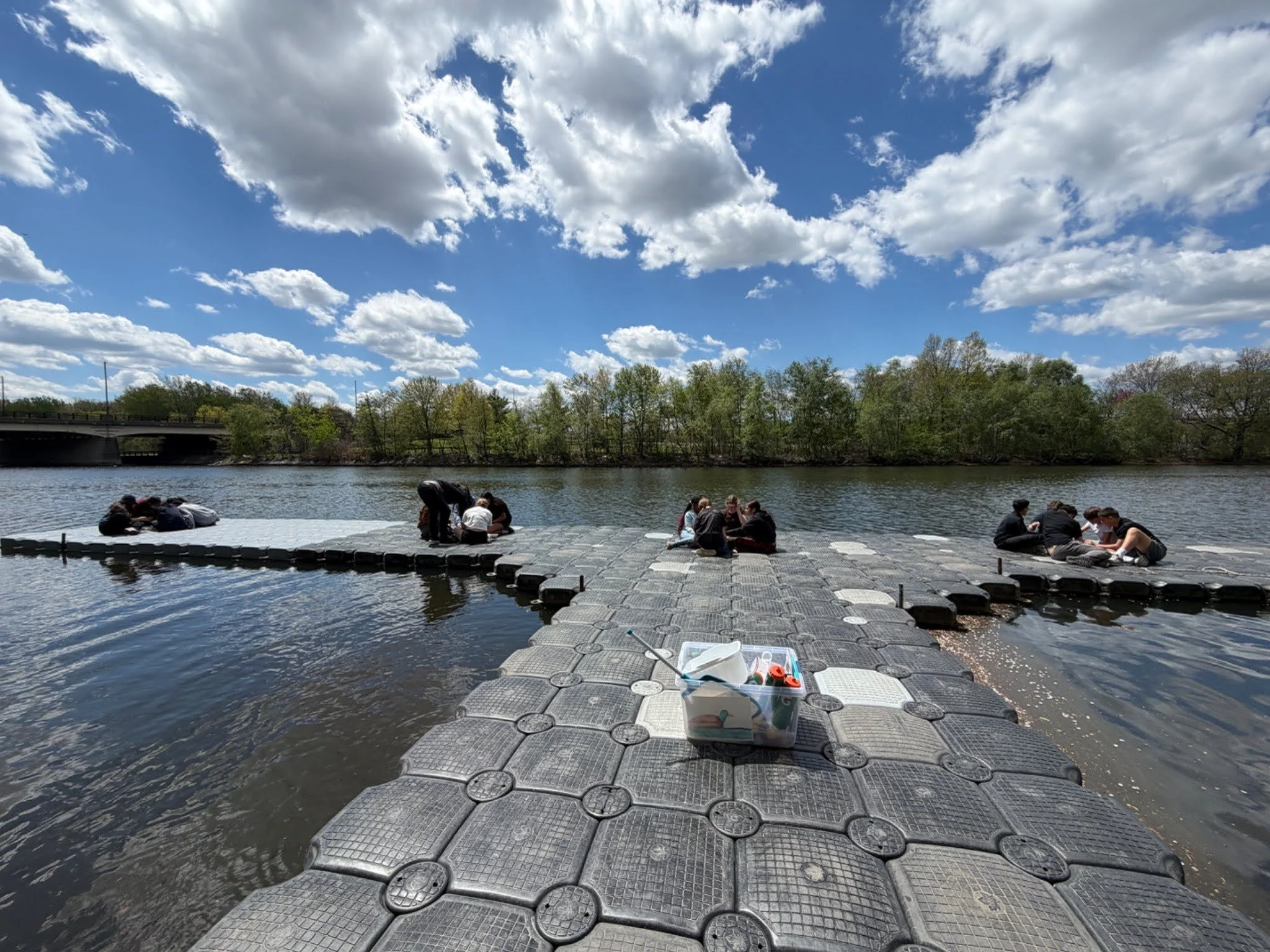
Groups of 7th graders at McGlynn Middle School conducting science experiments on the dock right outside of their school building.
Stay tuned!
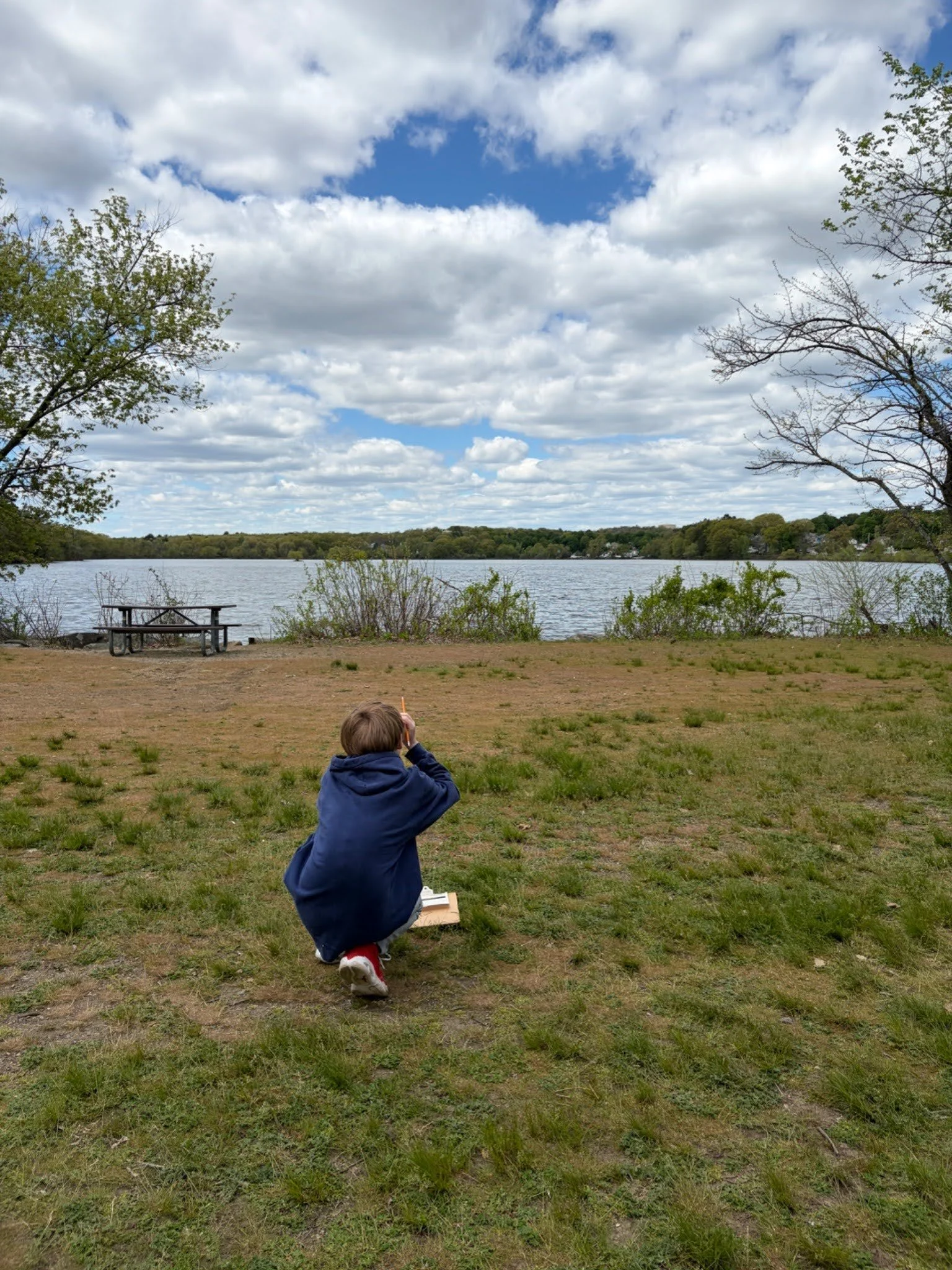
A 5th-grade student from Lynch Elementary observing local waterfowl and creating scientific drawings.
The thousands of students we met this year remind us that the future of the Mystic River watershed is in incredibly bright and curious hands. By connecting youth to their local ecosystems today, we are cultivating the scientists, advocates, and environmental stewards of tomorrow. Thank you to everyone who supported our education program this year for investing in the future of our communities.
Let's keep the momentum going into the next school year! To learn more about our programs, request a school visit, or support our educational mission, visit us at mysticriver.org/education.
Join MyRWA’s Education Manager as she explores uncharted waters!
Our very own Education Manager Alice Chou has been selected by Ocean Exploration Trust (OET) as a 2026 Science Communication Fellow onboard the deep-sea expedition vessel Nautilus. Alice will join an expedition team this summer in a groundbreaking STEAM initiative exploring deep-sea habitats around the Mariana Islands from July 25 to August 16, connecting the health of our local watersheds to deep ocean waters.
While at sea, Alice will have the opportunity to connect live with learners across the watershed. Everyone can engage with these educators via NautilusLive.org, a 24-hour live-streaming web portal that brings expeditions from the field to explorers on shore through telepresence technology and social media. Schools and community groups can also schedule free, live one-on-one Q&A sessions with explorers on the ship beginning in June.