A major milestone in effort to restore access to breeding habitat for river herring in the Mystic
The Horn Pond Fish Passage project received final funding needed for construction with an anticipated construction start in Summer/Fall 2026, aiming to be complete before the river herring migration begins in spring 2027. Funding for this new fish passage is coming from settlement funds from the Industri-Plex Natural Resource Damages Trustee Council, a North American Wetlands Conservation Act (NAWCA) grant, and a generous $1M gift from an anonymous foundation to the Mystic River Watershed Association. We have immense gratitude to these funding agencies for making this transformative project possible in our watershed community without financial burden on the municipal budget.
After completion, the new fish passage at Woburn’s Scalley Dam will give river herring access to 100+ acres of spawning habitat in Horn Pond. With this intervention at Horn Pond, it is estimated that the Mystic River herring run could reach over a million fish (Division of Marine Fisheries). Additionally, viewing areas at this new fish passage, including a state-of-the-art underwater window, will allow more people to witness this incredible migration than ever before.
The Horn Pond Fish Passage project is the culmination of decades of community advocacy for river herring in the Mystic River watershed. River herring were once so plentiful that it was said you could walk across their backs to get from one side of the river to the other (17th century records, research by Thomas Green). Their population was decimated by overfishing in the ocean and the construction of inland dams that blocked their annual migration to freshwater spawning grounds. Thanks to thousands of volunteer hours to collect data on our watershed’s river herring migration and partnership across nonprofit, municipal, and state organizations, a fish ladder was constructed at the Mystic Lakes Dam in 2012 and at the Center Falls Dam in 2017. With these two improvements, the Mystic herring migration quadrupled in size and has been the largest migration in all of MA for the past two years. Continued advocacy and partnership is what has brought success for our local river herring migration again in the Horn Pond Fish Passage project. We are thrilled that river herring will have access to much of their ancestral range after this project is completed.
Read more about the recovery effort for the river herring population in the Mystic.
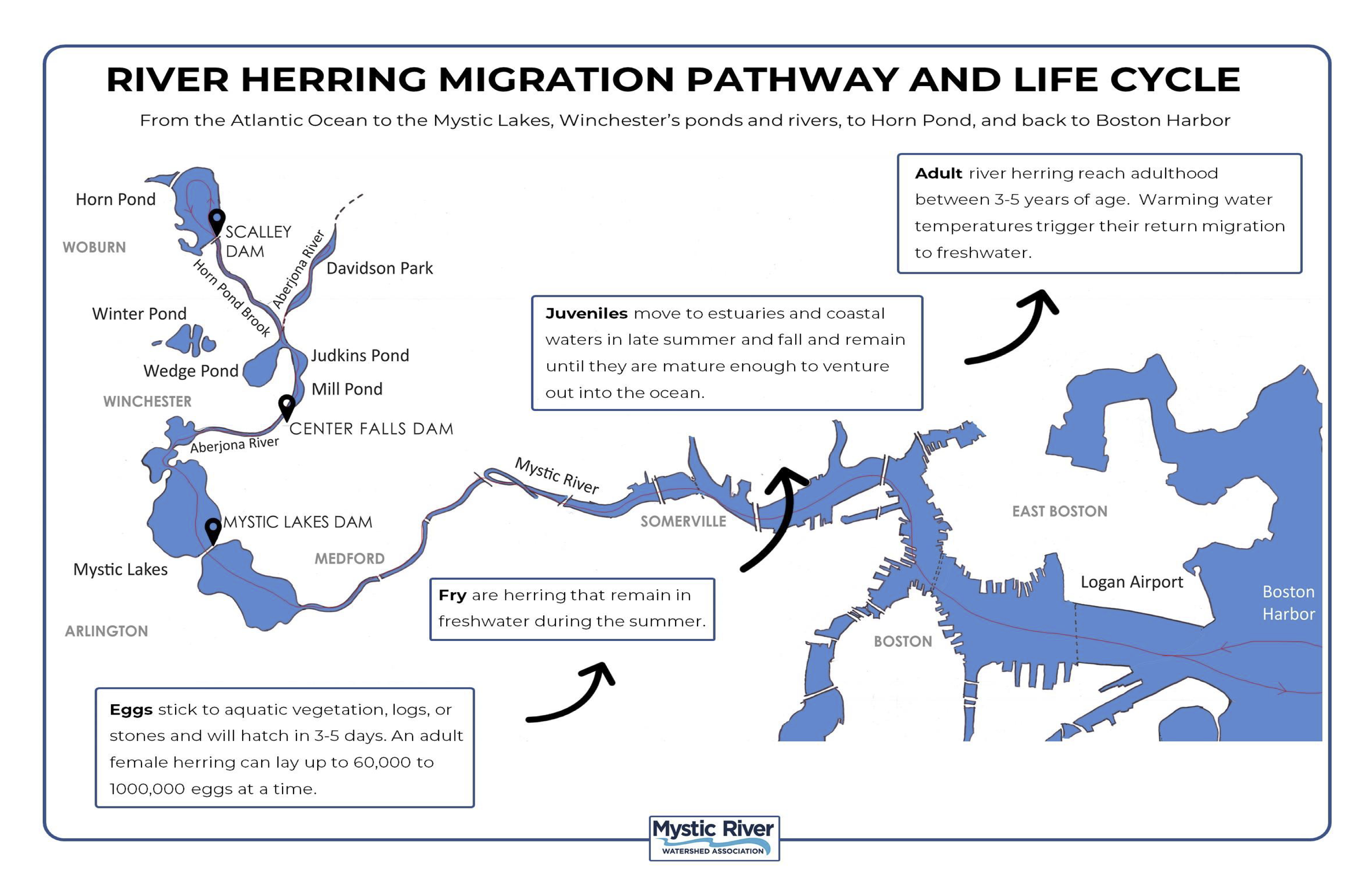
Figure 1. The river herring migration pathway from Boston Harbor, up the Mystic River to the Mystic Lakes and Horn Pond. Herring pass through the Amelia Earhart Dam, a fish ladder at the Mystic Lakes Dam, a fish passage at Center Falls Dam, and soon they will have a fish passage at Scalley Dam at Horn Pond.
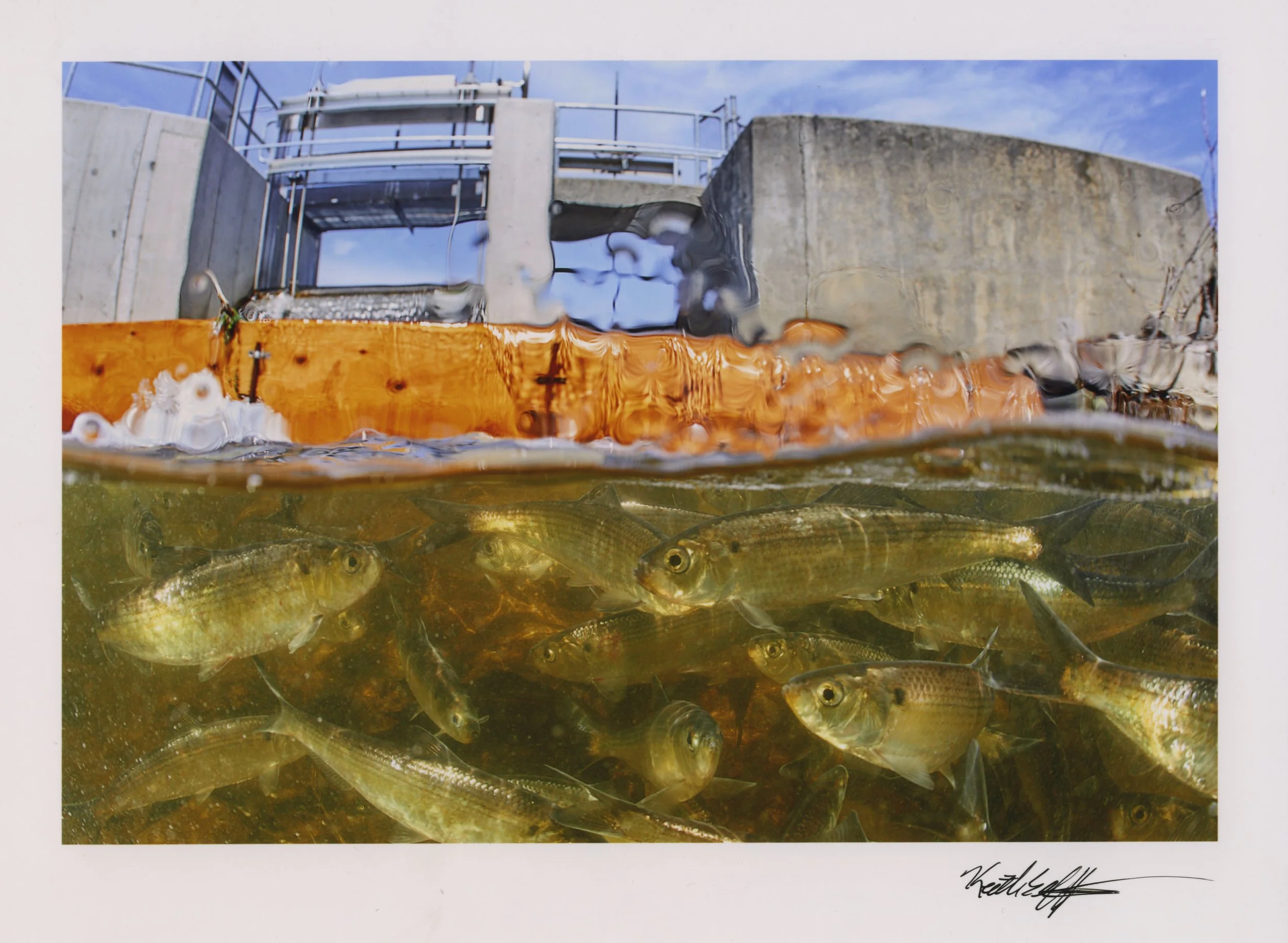
Figure 2. Currently, many herring make it to the bottom of Scalley Dam and can’t get into Horn Pond. Credit: Keith Ellenbogen
The Horn Pond Fish Passage will consist of a pool and weir system, which allows herring to gradually make their way up from the bottom of Scalley Dam into Horn Pond. New educational signage and an ADA accessible pathway to an underwater viewing window will further improve the area for visitors.
View the project webpage and design presentation.
“Any time a project can improve our environment, and bring increased recreational opportunities to our residents, it is a win for Woburn,” said Alex Rozycki, Woburn City Engineer. “We’re grateful to reach this critical funding milestone. The Horn Pond Fish Passage is made possible through strong partnerships, and the generosity of funders committed to restoring our river and pond ecosystems at Horn Pond. We look forward to seeing the fish passage come to life."
“We are thrilled to see the Horn Pond Fish Passage move forward! Thank you to the herring monitor volunteers who have spent thousands of hours collecting data on the migration and helped us advocate for the impact an improved Horn Pond fish passage would have on the Mystic herring population,” said Daria Clark Santollani, MyRWA Senior Engagement Manager. “That the most urbanized watershed in New England is also home to the largest river herring migration in the state is a testament to a concerted effort by residents, MyRWA, and local leaders to create fish passages and improve water quality.”
“The Horn Pond Brook Fish Passage will greatly expand the wildlife habitat for river herring, resulting in an increase in migrating bird species including bald eagles, ospreys, and herons. This is a fantastic educational opportunity to foster the next generation of conservationists and naturalists in driving a culture of biodiversity and a sustainable future for our precious natural resource areas,” said Gerry Lohnes, Woburn Conservation Commission member.
BE PART OF THE MOVEMENT FOR RIVER HERRING!
We invite the public to learn more about the river herring migration and get involved. Registration is currently open to volunteer as a river herring monitor this spring, where you can help collect data each week that informs our watershed’s official population estimate. Importantly, the 2026 population estimate will mark our last pre-construction snapshot, creating a critical baseline for measuring the impact of the Horn Pond Fish Passage in the years ahead. Learn more about being a volunteer herring monitor and sign up before March 25th!
“Monitoring provides a front row seat to one of nature's wonders. The ability to watch river herring navigate up the rock spillway to return to a spawning ground and then to navigate down the same rock spillway to head back to the ocean is simply fascinating to me. Seeing the pond teaming with the small fry herring later in the season tells me that our ecosystem is thriving.” - Jim Joyce, co-founder of Friends of Horn Pond and a Horn Pond herring monitor.
We encourage you to come to Woburn Conservation Day on Saturday, May 2nd to meet the project team and learn more about the Horn Pond Fish Passage design. We will be on site near Scalley Dam and may even be able to see river herring at the bottom.
And we invite you to run like herring at MyRWA’s 30th Annual Herring Run & Paddle! You can run, walk, roll, and/or paddle with us to celebrate the return of river herring on Sunday, May 17th from 9AM-2PM.
Thank you to the many volunteers, donors, and partners who make this effort possible!
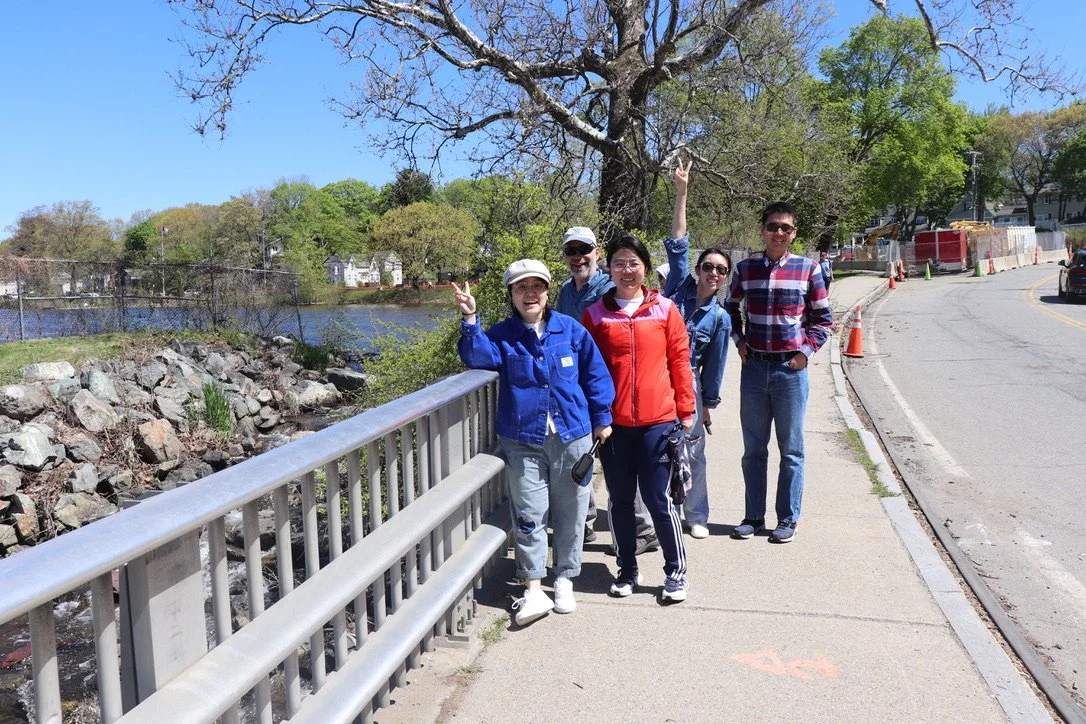
Figure 3. Visitors view river herring at Scalley Dam during Woburn Conservation Day. Credit: Daria Santollani
MORE ABOUT THE IMPORTANCE OF RIVER HERRING
River herring — Alewife and Blueback herring — are migratory species that spend most of their lives in the open ocean, but return to freshwater every year to spawn in the river system they were born in. River herring first return to freshwater to reproduce at 3-5 years old, when they are sexually mature. Fish with this type of life cycle are called diadromous. Diadromous species make up fewer than 1% of all fish species, and they face pressures on their populations in both their saltwater and freshwater habitats. River herring, in particular, are threatened by over-harvesting in the ocean and by the loss of inland habitat for breeding caused by dams blocking access to inland lakes and streams.
Herring have long been an important resource for native people in this area, being used for food, as fertilizer for crops, and as a signal of the new year. They also have a crucial role in freshwater and marine food webs. River herring are prey for seals, and other marine mammals in the ocean; seabirds, cormorants, ospreys, herons, and eagles; tuna, cod, trout, and several species of bass; mink, fox, raccoon, skunk, weasel and turtles. As zooplankton eaters, they turn an inaccessible resource into the food for a large number of species humans consume, enjoy and profit from.