MyRWA’s oldest water quality monitor, Pete Howard, retired this year at the age of 90. Pete sampled water from the Mystic River at site MYR071 at the High Street Bridge just downstream of Lower Mystic Lake for 19 years alongside his sampling partner Matt Shuman. Pete rode his bicycle to sample for nearly every single event over the years and sometimes used a rope to lower himself down to the river. He has volunteered long enough that he has seen MyRWA grow from 1 staff member to 20.
We have a tradition of recognizing water quality monitors on their major 5-year anniversaries at our Annual Meeting each fall. Though Pete stopped short of his 20th year, we couldn’t miss the chance to celebrate his long-time dedication to MyRWA, so we asked him to reflect back on his experience volunteering.
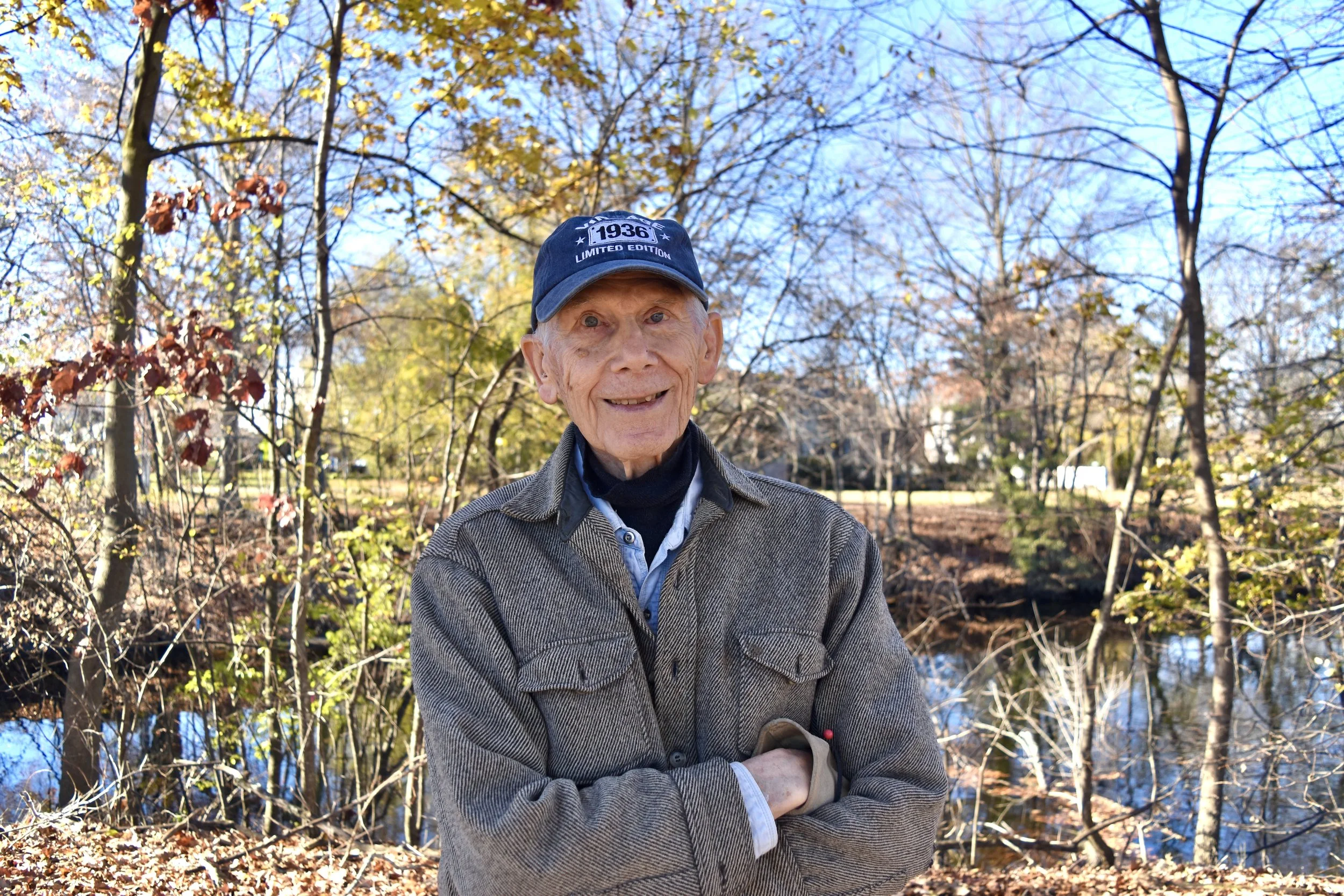
Pete at his sampling location - MYR071 - on the Mystic River near the High Street Bridge in Medford. Credit: Isaiah Johnson
From Pete:
I have always lived near a river and have enjoyed exploring them. First, the Farmington River near Loomis School, in Connecticut. Then, the Seekonk River near Brown University in Rhode Island. Then, Cooper River, where I was stationed north of Charleston, South Carolina. Then the Charles River, Cambridge, Massachusetts, near where I worked for many years.
I made a canoe at Loomis and used it to explore all those rivers. It was natural to use it to explore the Mystic River when I moved here. I discovered how polluted it was. When I learned about the MyRWA water sampling program, I realized it was something that I could do to document the pollution.
On my monthly sampling days, my alarm would wake me at 5:45. I would quickly do exercises, use the toilet, wash, and shave. Even in winter, the sun would be up. I had a plastic cooler to hold the sampling bottles, the thermometer, and a clipboard to hold the field note sheet. I would eat half a breakfast and empty 5 ice cube trays into the cooler. Until recently, I would tie the cooler on a special tray I made to hold it on the regular rear wheel luggage carrier on my bicycle and ride the couple of miles to meet my partner, Matt Shuman, at our sampling place: the bridge at High Street in Medford.
Matt would come by car with the sampling pole and the oxygen sampling chemicals. First, I would hang the thermometer to get the air temperature. We had to climb down 15 or 20 ft to reach the river. After a few months, we settled on our roles. I would load the bottles on the sampling pole and remove the bottle top. Matt would swing it out, take a sample, swing it back in. I would replace the bottle top. We repeated this until all the bottles were full. I would climb back up with the cooler. Matt would fill the small bottle with water to test for dissolved oxygen, and a large bottle to measure water temperature. He would then climb the bank carrying the two bottles and the sampling pole.
At the top of the bank, Matt would fix the oxygen using drops of 4 chemicals while I filled out the field notes, including air and water temperature. I would return the data sheet and bottles to the MyRWA office, pick up bottles for the next month, and go home to finish breakfast.
I think we both enjoyed the process when the weather was fine and endured it when it wasn’t. I drove my car in foul weather, and as I got older, I drove. There were sometimes swans on the river and a mat of water lilies. At times, our sampling spot had been used by a drinker. We collected the trash. There has been much less of this in recent years. I like to think that all the attention MyRWA has paid to the river has made this happen. I am proud to have contributed to this in a small way.
My older son is a long-time canoe and kayak racer, mostly in New England. He and I joined the Herring Run and Paddle race sponsored by MyRWA one time a few years ago. We paddled the canoe I made years ago. He had long since graduated to sleek racing boats. We did the shorter route. Some of his racing friends passed us, but they did the longer race. We paddled hard to keep up. Later, my son said, “Never again.”
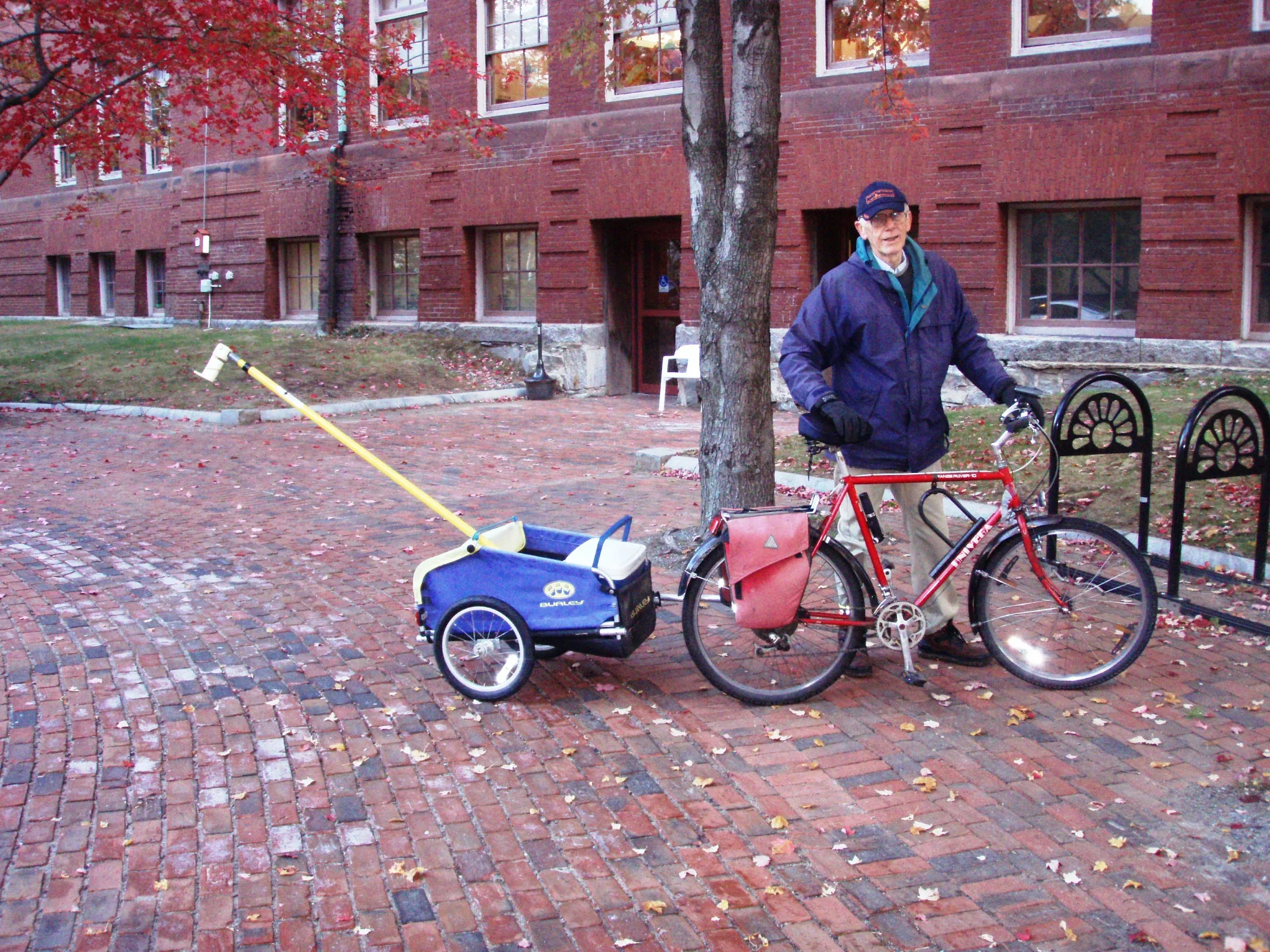
Pete with his bike, cooler, and sampling pole on his way to go sample. Credit: MyRWA Archives
MyRWA’s water quality monitoring program organizes a dedicated group of 40+ volunteer community scientists who go out monthly to collect water samples from around the watershed. The data they collect helps us provide you with the information you need to know when it's safe to recreate on the water and allows us to advocate for policies, funding, and infrastructure to improve water quality across the watershed.
For Giving Tuesday on December 1st, we’re raising $30,000 to fully fund our 15 water quality monitoring sites for the year.